




What's Happening?
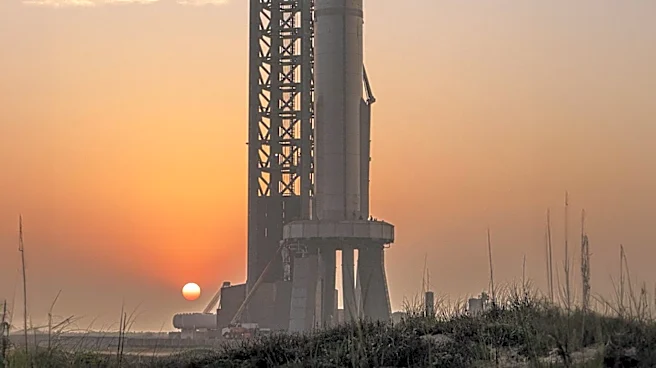
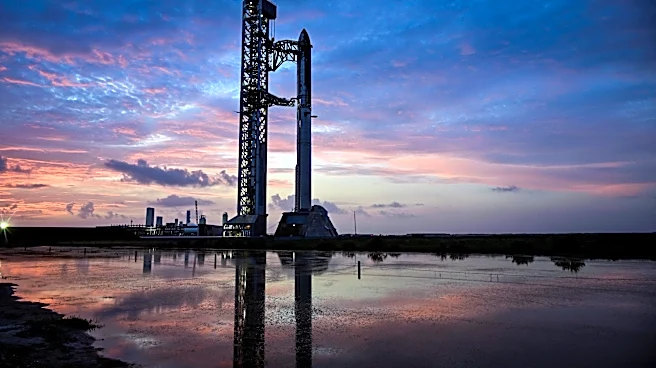
SpaceX successfully launched its Starship rocket on a test flight from its base in Texas, marking a significant milestone in its development. The rocket, towering at 407 feet, carried 20 of the most advanced Starlink satellites, which were released during
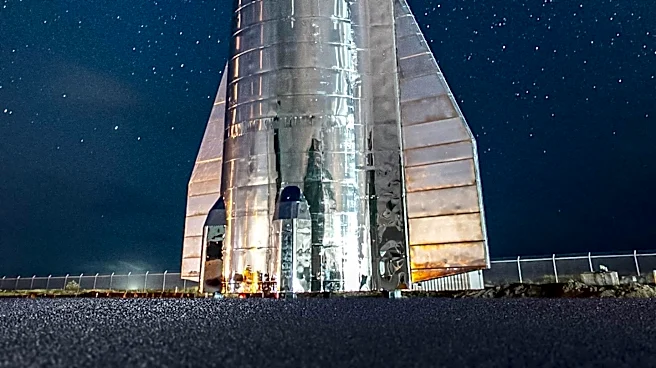
the flight. This mission is a critical step towards using Starship as a lunar lander for NASA's moon missions. The flight concluded with a splashdown in the Indian Ocean, where the spacecraft remained afloat, a notable improvement from previous tests. SpaceX had replaced six engines on the first-stage booster after a previous launch abort. Despite some engines not reigniting for the booster's return, the spacecraft continued its mission successfully. The test also involved collecting data on the heat shield's performance, crucial for future missions.
Why It's Important?
This successful test flight is pivotal for SpaceX's ambitions to use Starship for lunar and Martian missions. The deployment of advanced Starlink satellites enhances SpaceX's satellite internet constellation, which is already the largest in the world. The mission's success also supports NASA's Artemis program, which aims to return humans to the moon. The data collected on the heat shield's performance is vital for ensuring the spacecraft's safety during reentry, a key factor for its reuse. This development positions SpaceX as a leader in space exploration and satellite technology, potentially influencing global space policies and commercial space travel.
What's Next?
SpaceX plans to continue testing Starship to ensure its readiness for future missions, including NASA's Artemis III mission, where astronauts will practice docking with the spacecraft. The company aims to achieve full reusability of the spacecraft, which would significantly reduce costs for space travel. Further tests will focus on improving the booster's return and refining the heat shield's durability. SpaceX's long-term goal includes using Starship for Mars colonization, with plans already underway for tourist trips to Mars and the moon. These developments will likely attract attention from international space agencies and private investors.