




What's Happening?
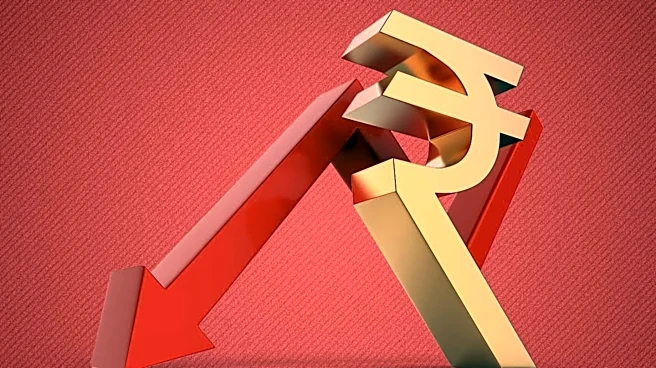
On November 23, 2026, the rupee experienced significant volatility, declining 23 paise to 92.85 against the U.S. dollar in early trade. This movement occurred despite an initial boost from easing crude oil prices, as the rupee subsequently came under
pressure due to a firm American currency, according to forex traders. The rupee opened at 93.47 in the interbank foreign exchange market, briefly climbing to 92.43 before settling at 92.85, marking a 23-paise drop from its previous close. This decline follows a period of appreciation, where the rupee had gained over 1.6 percent in the preceding five consecutive sessions, reaching 92.62 against the U.S. dollar on Friday, November 20, 2026. The dollar index, which measures the greenback's strength against a basket of six major currencies, was recorded at 103.71, showing a slight decrease of 0.03 percent. Domestic equity markets also saw a selling trend, with the Sensex declining 408.30 points and the Nifty falling 118.90 points in early trade.
Why It's Important?
The fluctuation of the rupee against the U.S. dollar has significant implications for U.S. businesses engaged in international trade and investment with India. A stronger dollar makes U.S. exports more expensive for Indian buyers, potentially impacting sales volumes for American companies operating in or exporting to India. Conversely, it makes Indian imports cheaper for U.S. consumers and businesses, which could affect domestic industries competing with Indian goods. For U.S. investors with holdings in Indian markets, a depreciating rupee can erode the dollar value of their returns. The underlying factors, such as crude oil prices and the strength of the American currency, reflect broader global economic dynamics that influence investor sentiment and capital flows. The selling trend in domestic equity markets in India, alongside the rupee's decline, suggests a cautious outlook among investors, which could lead to capital outflows and further pressure on the rupee, impacting the profitability of U.S. firms with Indian operations.
What's Next?
The immediate future will likely see continued monitoring of global crude oil prices and the U.S. dollar's strength, as these are key determinants of the rupee's performance. Forex traders will be watching for any shifts in monetary policy from central banks, particularly the U.S. Federal Reserve, which could influence the dollar index. Further data on India's economic indicators, such as inflation and industrial output, will also play a role in shaping market sentiment. If the rupee continues to weaken, it could prompt the Reserve Bank of India to intervene in the foreign exchange market to stabilize the currency. U.S. businesses involved in trade with India may need to adjust their pricing strategies or hedging mechanisms to mitigate currency risks. Investors will be closely observing foreign institutional investor (FII) activity, as significant buying or selling could further influence the rupee's trajectory and the broader Indian equity market.
Beyond the Headlines
The rupee's volatility against the U.S. dollar highlights the interconnectedness of global financial markets and the complex interplay of various economic factors. Beyond immediate trade and investment impacts, sustained currency fluctuations can influence long-term strategic decisions for multinational corporations. For instance, U.S. companies might re-evaluate their supply chain strategies or manufacturing locations if currency instability significantly alters production costs. Furthermore, the strength of the U.S. dollar in this context underscores its role as a global reserve currency and a safe-haven asset during periods of uncertainty, drawing capital away from emerging markets. This dynamic can create a feedback loop where a stronger dollar puts more pressure on other currencies, potentially leading to broader economic adjustments and shifts in global trade balances. The situation also brings to light the ongoing debate about currency manipulation and the role of central banks in maintaining economic stability in an increasingly globalized financial landscape.