







What's Happening?
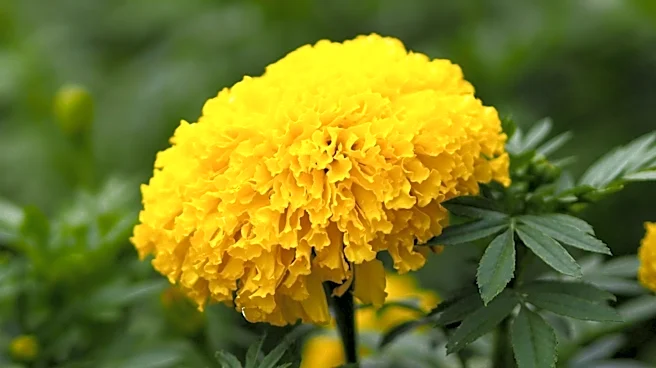
Researchers at the University of Georgia have discovered that discarded marigold flowers contain proteins with potential applications in sustainable food production. The study found that marigold proteins have levels comparable to quinoa and exhibit strong
heat stability, making them suitable for use in baked goods, sauces, soups, and dressings. The research highlights the potential to reduce floral waste by utilizing marigold flowers as a food ingredient. However, further safety testing and large-scale manufacturing research are needed before commercial application. The study emphasizes the potential of marigold proteins to perform useful functions in food processing, such as moisture retention and emulsification.
Why It's Important?
This discovery could have significant implications for sustainable food production by providing a new source of plant protein while reducing floral waste. By utilizing discarded marigold flowers, manufacturers could potentially recover valuable proteins without the need for additional crop cultivation. This approach aligns with growing efforts to find sustainable and environmentally friendly food sources. The study also highlights the potential for marigold proteins to enhance the nutritional and functional properties of various food products, offering a promising alternative to traditional plant proteins.
What's Next?
Further research is needed to explore the commercial viability of marigold proteins in food production. This includes testing their behavior during large-scale manufacturing and ensuring safety and consistency. If successful, marigold proteins could become a valuable ingredient in the food industry, contributing to waste reduction and sustainable practices. The study opens the door for future exploration of other discarded plant materials as potential food sources, encouraging innovation in sustainable food production.