





What's Happening?
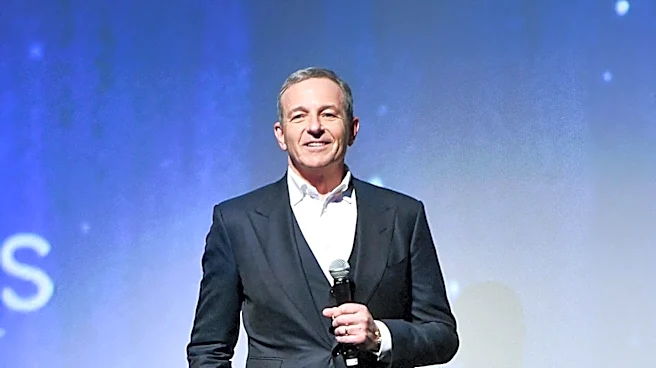
Disney CEO Bob Iger recently addressed criticisms regarding the perceived 'woke' content in Disney's productions and emphasized the company's focus on entertainment. This comes after activist investor Nelson Peltz criticized Disney for incorporating politically
correct narratives into its films and TV shows, which he argued contributed to declining box office revenues. Iger, who returned to the CEO role after Bob Chapek's tenure, stated that the company's primary objective is entertainment and that the term 'woke' is often misused. He highlighted the importance of creating engaging content for a diverse audience while acknowledging that not every piece of content will appeal to everyone. Iger also reflected on the challenges faced during Chapek's leadership, including a drop in streaming subscriptions and strained artist relations, which he attributed partly to the unexpected onset of the pandemic shortly after Chapek took over. He stressed the need for careful succession planning to avoid similar disruptions in the future.
Why It's Important?
This development is important for the U.S. entertainment industry as it reflects the ongoing tension between creative freedom, audience expectations, and corporate responsibility. Disney, as a major global entertainment conglomerate, sets trends and influences cultural discourse. Iger's comments signal a potential shift in the company's approach to content creation, prioritizing broad appeal and entertainment value over explicit social messaging, which could impact future productions and their reception. The emphasis on careful CEO succession planning also highlights a critical governance issue for large corporations, especially after the turbulent transition from Iger to Chapek and back. A stable and well-managed leadership transition is crucial for maintaining investor confidence and operational efficiency in a company of Disney's scale, affecting its stock performance and long-term strategic direction.
What's Next?
Moving forward, Disney is expected to continue its focus on developing engaging entertainment content that resonates with a wide audience. The company will likely implement a more robust and deliberate CEO succession plan, aiming to identify and prepare a suitable leader to ensure a smooth transition. This process will involve careful consideration by the board of directors regarding who the next leader will be, when the decision will be made, and how the handover of responsibilities will be managed. Iger's commitment to learning from past experiences suggests a more cautious and strategic approach to leadership changes. The company's content strategy will be closely watched by both critics and audiences to see if there is a noticeable shift in themes and messaging, potentially influencing box office performance and streaming subscription numbers.
Beyond the Headlines
Beyond the immediate business implications, this situation touches upon broader cultural and ethical debates surrounding corporate influence on societal values. The discussion around 'woke' content reflects a polarized cultural landscape where entertainment companies are increasingly scrutinized for their messaging. Disney's response to these criticisms could influence how other major studios approach content creation, balancing artistic expression with commercial viability and diverse audience sensitivities. The company's efforts to unify its data and streamline operations, as mentioned in related discussions, also point to a future where personalized content delivery and enhanced user experience, driven by big data and AI, will become central to its strategy. This could lead to more efficient content production and distribution, but also raises questions about data privacy and the potential for algorithmic influence on consumer choices.