





What's Happening?
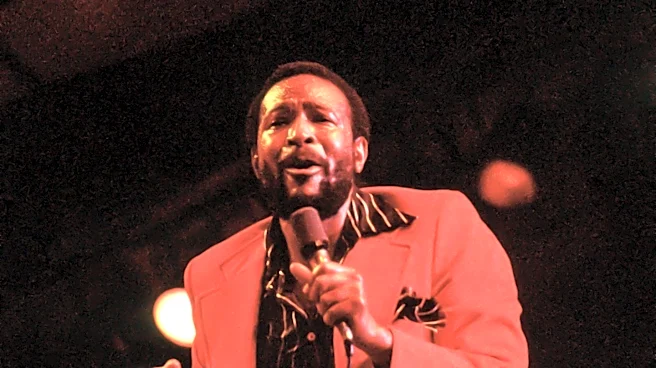
Pete Townshend, a founding member of The Who, has shared his experience of meeting his musical hero, Marvin Gaye, and the profound disappointment he felt regarding Gaye's state at the time. Townshend recounted the encounter, which occurred while The Who was
recording 'Face Dances' in London. He described Gaye as being in 'terrible shape,' a condition that deeply affected Townshend, who had long admired Gaye's music, particularly his work leading up to 'What’s Going On.' This meeting took place during a challenging period in Gaye's life, shortly after the release of his album 'Here My Dear' and just a few years before his death. Townshend noted that despite Gaye's personal struggles, a spark of his musical genius would re-emerge in his final years with songs like 'Sexual Healing.' The Who themselves had faced tragedy with the death of Keith Moon, making Townshend empathetic to the difficulties Gaye was enduring.
Why It's Important?
This reflection from Pete Townshend offers a poignant insight into the personal struggles faced by iconic musicians, even at the height of their careers. It highlights the human element behind the public personas of rock and soul legends, revealing that fame and artistic success do not insulate individuals from personal turmoil. For fans of The Who and Marvin Gaye, Townshend's account provides a rare glimpse into the private interactions and mutual respect among musical giants. It underscores the often-unseen pressures and challenges that can impact artists, influencing their creative output and personal well-being. The narrative also serves as a reminder of the fragility of life and the profound impact that personal circumstances can have on even the most celebrated figures in music history.
What's Next?
While this particular reflection is historical, it contributes to the ongoing narrative and legacy of both Pete Townshend and Marvin Gaye. For Townshend, it adds another layer to his public persona as a thoughtful and introspective artist, beyond his rock star image. For Gaye, it reinforces the understanding of the personal battles he fought, which are often intertwined with the interpretation of his later works. This kind of personal anecdote can fuel further biographical interest, potentially leading to new analyses or documentaries exploring the intersection of personal life and artistic creation for these figures. It also serves as a touchstone for discussions about mental health and the pressures of the music industry, topics that remain highly relevant today.
Beyond the Headlines
Townshend's candid admission about Gaye's condition and his own feelings of disappointment delve into the complex relationship between artists and their idols. It reveals that even those who achieve immense success can be vulnerable to the disillusionment that comes from seeing a hero in a compromised state. This experience can be a powerful catalyst for self-reflection, prompting artists to consider their own paths and the potential pitfalls of fame. The story also subtly touches upon the ethical considerations of public perception versus private reality, and how the struggles of artists, often hidden from the public eye, can profoundly shape their artistic output and personal legacy. It encourages a deeper appreciation for the human experience behind the music, acknowledging the triumphs and tragedies that contribute to an artist's complete story.