





What's Happening?
Chiang Mai, Thailand, is highlighted as a city rich in cultural and natural attractions, catering to a variety of traveler interests. The city is known for its vibrant night markets, offering street food and local crafts. It experiences more temperate
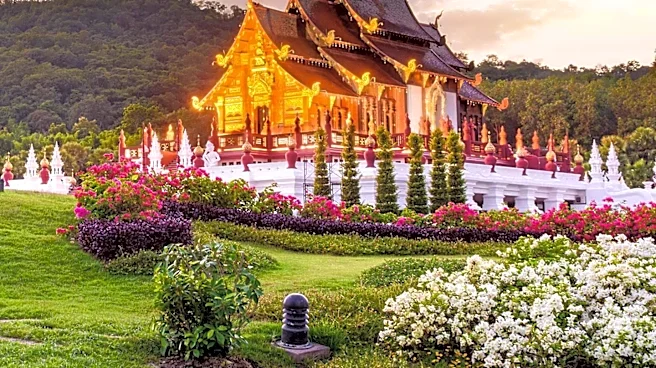
weather compared to other regions of Thailand, contributing to a relaxed lifestyle. Accommodation options like the Duangtawan Hotel Chiang Mai provide amenities such as spa facilities, wellness areas, and meeting rooms, conveniently located near the Night Market Street Food and historical sites. Key attractions include numerous temples, such as the Chiang Mai Old City Temples, Wat Phra That Doi Suthep, and the distinctive Wat Rong Khun (White Temple). The city also serves as a gateway to natural experiences, including elephant sanctuaries and jungle expeditions, where visitors can interact with rescued elephants, trek to waterfalls, and engage in bamboo rafting. The annual lantern festival in November is another significant cultural event, drawing visitors for its magical atmosphere and traditional celebrations.
Why It's Important?
The diverse offerings of Chiang Mai contribute significantly to Thailand's tourism sector, attracting international visitors seeking both cultural immersion and natural adventures. The city's emphasis on ethical elephant encounters, as seen in initiatives where proceeds support elephant rescue and indigenous women, reflects a growing trend in responsible tourism. This approach not only benefits local communities and wildlife conservation but also appeals to a segment of travelers increasingly prioritizing ethical and sustainable travel experiences. The blend of historical temples, bustling markets, and natural landscapes positions Chiang Mai as a comprehensive destination, fostering economic growth through tourism-related industries such as hospitality, local crafts, and guided tours. The city's ability to provide a relaxed yet engaging environment, coupled with its cultural festivals, enhances its appeal as a prime destination in Southeast Asia, potentially influencing travel patterns and destination choices for U.S. tourists.
What's Next?
Chiang Mai is expected to continue developing its tourism infrastructure to accommodate the growing interest in its cultural and natural attractions. Future developments may include further promotion of its ethical tourism initiatives, particularly around elephant sanctuaries, to attract more conscious travelers. The city will likely continue to host and enhance its annual festivals, such as the lantern festival, to draw larger international crowds and preserve local traditions. Efforts to maintain the balance between tourism growth and environmental preservation will be crucial. Local businesses and tour operators will likely innovate to offer more personalized and immersive experiences, ranging from culinary tours of its night markets to extended jungle expeditions. The focus will remain on showcasing Chiang Mai's unique blend of historical heritage, vibrant local life, and natural beauty, ensuring its sustained appeal as a top travel destination.
Beyond the Headlines
Beyond its immediate tourism appeal, Chiang Mai's development as a cultural and eco-tourism hub has deeper implications for regional sustainability and cultural preservation. The emphasis on supporting indigenous women and elephant rescue through tourism revenue highlights a model where economic activity directly contributes to social and environmental welfare. This approach can serve as a blueprint for other destinations grappling with the impacts of mass tourism, promoting a more equitable distribution of benefits and fostering a stronger connection between visitors and local communities. The city's ability to blend ancient traditions with modern tourism practices, such as offering diverse accommodation and activity options, reflects a dynamic cultural landscape. This continuous evolution ensures that while the city embraces global tourism, it also retains its unique identity and heritage, offering an authentic experience that goes beyond superficial sightseeing and encourages a deeper understanding of Thai culture and environmental stewardship.