







What's Happening?
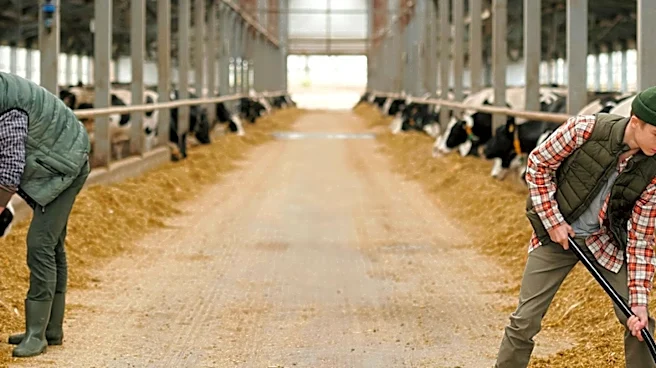
A significant philanthropic movement is emerging within the AI industry, as workers and companies like OpenAI and Anthropic are channeling substantial donations towards improving the welfare of factory-farmed animals. This year, approximately $40 million
has been donated by individuals associated with the AI sector to support animal welfare initiatives. The momentum for this cause was notably influenced by a tech podcast featuring Lewis Bollard, a leader in farm animal welfare, which spurred a fundraising campaign by Dwarkesh Patel. Patel's campaign, FarmKind, raised $2.3 million, with additional contributions continuing to flow. This trend is part of a broader shift in philanthropy, with younger tech workers eager to make impactful donations earlier in their careers.
Why It's Important?
The influx of donations from the AI sector represents a potential turning point for animal welfare advocacy, which has historically been underfunded compared to other causes. The financial support from AI industry professionals could significantly enhance efforts to improve conditions for animals in industrial agriculture. Moreover, this trend reflects a broader change in philanthropic behavior, with younger generations prioritizing early and impactful giving. The AI boom is expected to generate substantial new wealth, potentially redirecting billions into charitable causes. This shift could reshape the landscape of philanthropy, influencing which causes receive attention and funding.
What's Next?
As the AI industry continues to grow, the potential for increased philanthropic contributions remains high. The ongoing engagement of tech workers in charitable activities, such as volunteering and fundraising, suggests that this trend may continue to expand. Additionally, the focus on animal welfare could inspire similar movements in other underfunded areas. The challenge for nonprofit organizations will be to effectively utilize these funds to create meaningful change, ensuring that donations lead to tangible improvements in animal welfare and other supported causes.
Beyond the Headlines
The philanthropic shift within the AI industry raises questions about the future of charitable giving and the role of technology in addressing social issues. As younger generations redefine philanthropy, there may be increased scrutiny on the effectiveness of donations and the impact of wealth distribution. This could lead to a reevaluation of traditional philanthropic models and encourage more strategic and outcome-focused giving. The involvement of tech workers in philanthropy also highlights the potential for cross-industry collaborations to address complex global challenges.