






What's Happening?
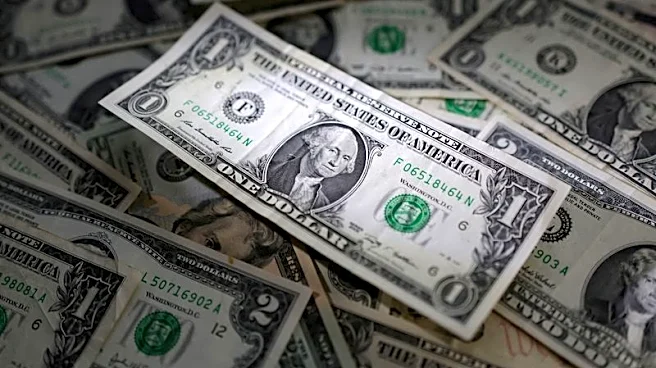
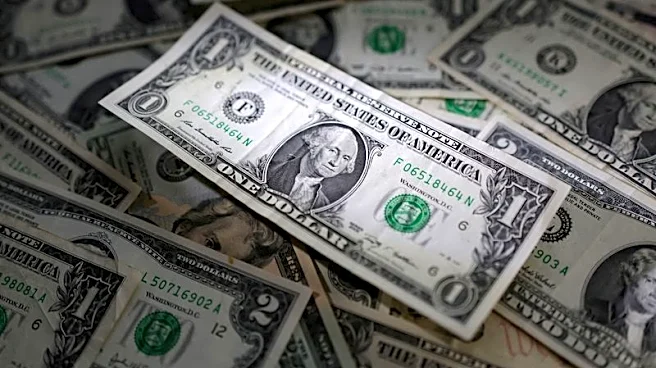
The Japanese yen experienced a significant decline against the U.S. dollar, weakening to ¥156.75 per dollar. This depreciation occurred despite the Bank of Japan (BOJ) implementing an interest rate hike, which typically strengthens a currency. The yen had
initially fallen by as much as 1.3% earlier in the trading session. Following this, the Nikkei newspaper reported that the BOJ conducted a 'rate check' with market participants. A rate check is often interpreted as a preliminary step before official intervention in the foreign exchange market. This development comes weeks after a joint intervention by U.S. and Japanese authorities aimed at bolstering the yen, which had previously reached its weakest level in decades approximately two months prior. The BOJ's recent interest rate increase, while anticipated, did not provide the clear guidance on future borrowing cost increases that traders had hoped for, contributing to the yen's continued weakness.
Why It's Important?
The weakening of the Japanese yen against the U.S. dollar has significant implications for global financial markets and trade, particularly for the U.S. economy. A weaker yen makes Japanese exports more competitive, potentially increasing demand for Japanese goods in the U.S. and other markets, which could impact American manufacturers. Conversely, it makes imports into Japan more expensive, affecting U.S. companies that export to Japan. For U.S. investors, a depreciating yen can reduce the value of their Japanese asset holdings when converted back to dollars. The potential for intervention by the Bank of Japan, possibly in coordination with U.S. authorities, highlights concerns about currency volatility and its broader economic consequences. Such interventions aim to stabilize exchange rates, but their effectiveness can be limited if underlying economic fundamentals are not addressed. The situation also reflects the ongoing divergence in monetary policies between the U.S. Federal Reserve and the Bank of Japan, with the former having maintained higher interest rates for longer, attracting capital flows to the U.S. and strengthening the dollar.
What's Next?
The report of the Bank of Japan's 'rate check' suggests that official intervention in the foreign exchange market could be imminent. Market participants will be closely watching for any further statements or actions from the BOJ regarding its monetary policy and its stance on the yen's value. Should the yen continue to weaken, the likelihood of direct intervention, potentially in coordination with U.S. Treasury officials, will increase. Such an intervention would involve the BOJ selling dollars and buying yen to strengthen its currency. However, the long-term effectiveness of such measures depends on the underlying economic conditions and the credibility of the central bank's commitment. Traders will also be looking for clearer guidance from the BOJ on its future interest rate trajectory, as a more hawkish stance could provide sustained support for the yen. The U.S. Treasury will likely monitor the situation closely, as excessive currency volatility can impact global trade and financial stability.
Beyond the Headlines
The persistent weakness of the Japanese yen, despite an interest rate hike, underscores the complex interplay of global monetary policies and economic fundamentals. This situation highlights the challenges faced by central banks in managing currency values in an interconnected global economy. The BOJ's cautious approach to further rate increases, even as other major central banks have tightened monetary policy more aggressively, reflects its unique economic circumstances, including concerns about deflation and the need to support economic growth. The repeated need for 'rate checks' and potential interventions also raises questions about the sustainability of current exchange rate trends and the potential for a 'currency war' if countries increasingly resort to competitive devaluations. Furthermore, the yen's depreciation could have broader geopolitical implications, influencing trade relationships and investment flows between Japan, the U.S., and other major economic powers. The long-term impact on Japan's economy, including its export-oriented industries and domestic consumption, will be a critical area to watch.