




What's Happening?
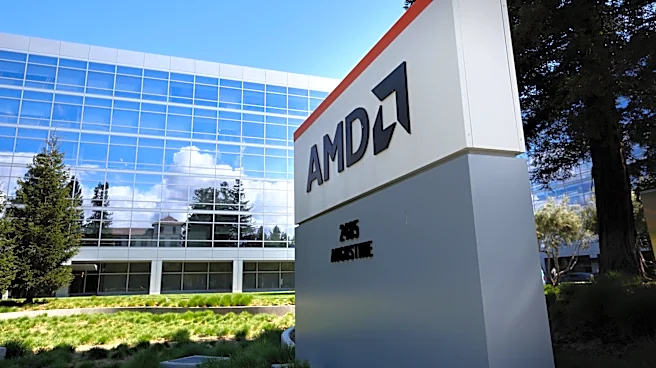
U.S. semiconductor giant AMD experienced a significant stock decline, dropping approximately 20% over two trading sessions. This downturn was triggered by a report from Hunterbrook Media alleging that new AMD firmware was repeatedly found in products
from IEIT Systems, a major Chinese server maker and core subsidiary of Inspur. IEIT Systems was placed on the U.S. government's export control list on March 25, 2025. The report indicates that IEIT Systems embedded at least six types of new AMD firmware, including 'TurinPI' for AMD's 'EPYC' server CPUs, into updated server models, with the latest update published on October 19, 2026. This suggests continued supply of AMD software to an entity under U.S. export restrictions. The report also noted that firmware from Singapore-based Kaytus, China's Maginfra, and California-based Aivres matched IEIT Systems' firmware, with Kaytus explicitly stating IEIT Systems as its ultimate parent company.
Why It's Important?
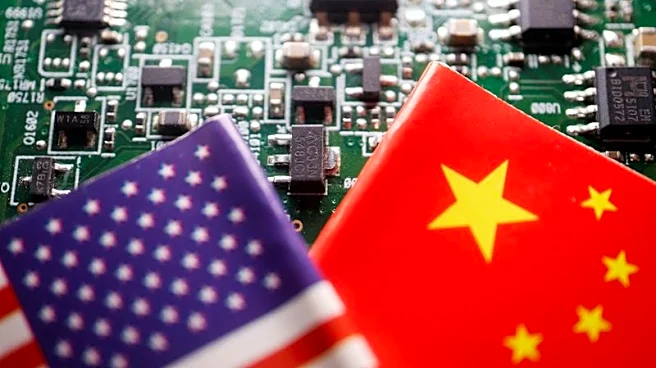
The allegations against AMD and the subsequent stock plunge highlight the significant risks U.S. technology companies face regarding export controls and compliance, particularly concerning China. The U.S. government's efforts to restrict advanced technology access to certain Chinese entities are designed to safeguard national security interests. If AMD is found to have violated these controls, it could face substantial penalties, reputational damage, and stricter regulatory scrutiny. This situation also underscores the complexities of global supply chains and the potential for circumvention of export restrictions through subsidiaries or third-party entities. The broader semiconductor industry, including companies like Nvidia, also felt the impact, as investors reacted to the potential for increased regulatory enforcement and the challenges of navigating U.S.-China tech tensions. This event could lead to a re-evaluation of compliance mechanisms and due diligence processes for U.S. tech firms operating internationally.
What's Next?
The immediate next steps will likely involve investigations by U.S. regulatory bodies, such as the Commerce Department, into the allegations against AMD. AMD will need to address these claims and demonstrate its compliance with export control regulations. The incident could prompt a review of existing export control policies and their enforcement, potentially leading to new rules or stricter interpretations to prevent similar occurrences. For the semiconductor industry, this event may necessitate enhanced internal compliance programs and more rigorous vetting of international partners and customers. Investors will closely monitor the outcome of any investigations and AMD's response, which could further impact its stock performance and market position. The broader geopolitical landscape between the U.S. and China will also continue to influence the regulatory environment for technology exports.
Beyond the Headlines
This incident delves into the intricate ethical and legal challenges faced by global technology companies operating within a complex web of international trade regulations and national security concerns. The alleged use of indirect channels, such as subsidiaries or third-party companies, to supply technology to export-controlled entities raises questions about corporate responsibility and the effectiveness of current enforcement mechanisms. It highlights the difficulty of tracking and controlling the flow of intellectual property and software in a globalized digital economy. The situation could also accelerate the trend of 'decoupling' in the tech sector, as U.S. companies may be compelled to further disentangle their operations from certain regions to mitigate compliance risks. This could lead to a more fragmented global technology landscape, impacting innovation, supply chain efficiency, and international collaboration in critical technological advancements.