






What's Happening?
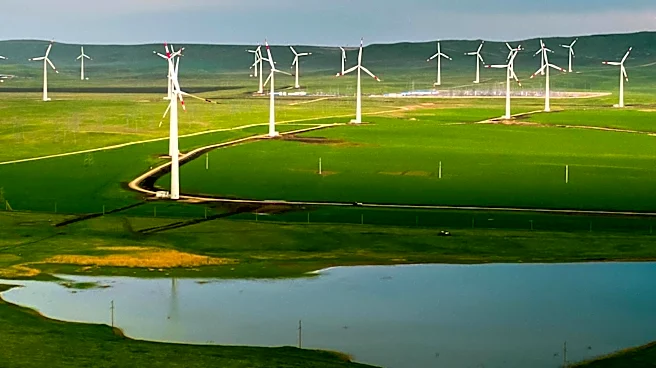
The U.S. wind energy sector is poised for significant growth through the repowering of existing wind farms, according to BloombergNEF (BNEF). Over the next decade, the U.S. is expected to build 86 gigawatts (GW) of new wind capacity, with 10 GW coming
from repowering projects. This process involves upgrading older turbines with newer, more efficient models, which can generate more electricity at a lower cost. The average capacity of onshore wind turbines in the U.S. has increased from 0.8 megawatts (MW) in 2000 to 3.5 MW in 2024. The first 6-MW turbine project in the U.S. was completed in Oklahoma in 2024. The Northwest and Midwest regions are expected to lead in repowering efforts, with significant projects also anticipated in Texas, California, and the mid-Atlantic. In California, repowering will account for nearly all new onshore wind capacity due to the saturation of suitable sites.
Why It's Important?
Repowering existing wind farms is crucial for the U.S. to maintain its leadership in renewable energy and meet future energy demands. By replacing older turbines with modern, more efficient models, the U.S. can increase electricity generation without expanding into undeveloped areas, thus minimizing environmental impact. This approach also supports the transition to cleaner energy sources, reducing reliance on fossil fuels and contributing to climate change mitigation efforts. The economic benefits include job creation in manufacturing, installation, and maintenance of new turbines, as well as potential cost savings for consumers due to lower electricity prices. Additionally, repowering can extend the operational life of wind farms, ensuring continued revenue streams for local communities and investors.
What's Next?
As the U.S. moves forward with repowering projects, developers will need to navigate logistical challenges such as transportation of larger turbine components and strengthening of existing infrastructure. Regulatory approvals will be necessary to ensure compliance with environmental and community impact standards. The industry is likely to see increased collaboration with international manufacturers to access the latest turbine technologies. Stakeholders, including government agencies, energy companies, and environmental groups, will play a critical role in shaping policies and incentives to support repowering initiatives. The success of these projects could set a precedent for other renewable energy sectors, encouraging further investment and innovation.