
What's Happening?
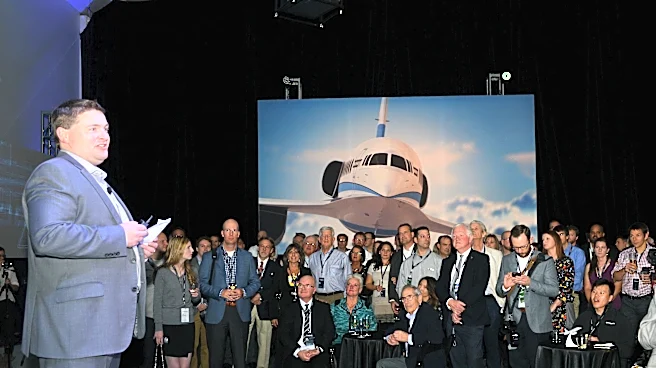
Scott Alexander, President of Propulsion Systems at L3Harris Technologies, is slated to be a featured speaker at the American Aerospace & Defense Summit. Alexander will deliver a keynote address on the first
day of the summit, focusing on the current state and future of the aerospace and defense supply chain. His presentation will specifically address the historic demand for solid rocket motors and how L3Harris Technologies is responding to this demand. He plans to detail the company's strategy, which includes over $1 billion in supplier investments and the implementation of automation technologies, aimed at strengthening the supply chain to meet increased production needs. The summit is scheduled to take place in Glendale, AZ, from December 3–4, 2026, and registration is reportedly nearing its close with limited passes remaining.
Why It's Important?
The insights provided by Scott Alexander are crucial for understanding the resilience and future direction of the U.S. aerospace and defense industry. The significant investment of over $1 billion in supplier development and automation by L3Harris Technologies signals a proactive approach to mitigating potential supply chain vulnerabilities, which have been a recurring concern across various sectors. This initiative directly impacts national security by ensuring the timely production and delivery of critical defense components like solid rocket motors. Furthermore, the focus on automation suggests a broader trend within the manufacturing sector to enhance efficiency and reduce reliance on manual labor, potentially leading to job reconfigurations and a demand for new skill sets within the workforce. Stakeholders, including government agencies, defense contractors, and investors, will be closely watching these developments for indicators of industry stability and growth.
What's Next?
Following Scott Alexander's keynote at the American Aerospace & Defense Summit, industry observers will likely analyze the specifics of L3Harris Technologies' investment and automation strategies. The information shared could influence other defense contractors to adopt similar measures to bolster their own supply chains. Discussions at the summit may also lead to new collaborations or partnerships aimed at addressing broader industry challenges. Furthermore, the emphasis on meeting historic demand for solid rocket motors suggests continued high levels of defense spending and production in the coming years. The insights from Alexander's presentation could also inform policy discussions regarding industrial base resilience and strategic national investments in critical manufacturing capabilities.
Beyond the Headlines
The substantial investment by L3Harris Technologies in its supply chain and automation reflects a deeper strategic shift within the U.S. defense industrial base. This move goes beyond simply meeting current demand; it represents an effort to future-proof critical manufacturing capabilities against geopolitical uncertainties and potential disruptions. The integration of advanced automation technologies could also set new benchmarks for efficiency and quality control in defense manufacturing, potentially influencing standards across the broader industrial sector. Ethically, the increased automation raises questions about the future of labor in defense manufacturing and the need for workforce retraining programs. Legally, such large-scale investments may attract scrutiny regarding fair competition and potential market consolidation within the defense supply chain, ensuring that smaller suppliers also have opportunities to participate and innovate.