





What's Happening?
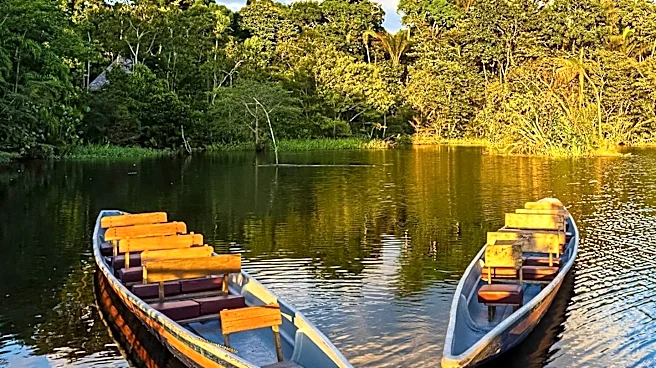
Amazon River cruises departing from Manaus, Brazil, provide a range of travel experiences, typically lasting from 3 to 8 days. These cruises navigate the Negro and Solimões rivers, offering daily excursions that include jungle trekking, pink river dolphin
watching, piranha fishing, and visits to local riverside communities. Manaus serves as the primary departure point, being well-connected to major Brazilian cities and offering direct flights from other South American destinations. Travelers can choose between simpler, more affordable two-story regional boats or all-inclusive expedition ships that provide enhanced amenities like river-view cabins and fine dining. The itineraries often feature key attractions such as the 'Meeting of the Waters,' where the dark-watered Rio Negro and the milky-brown Rio Solimões flow side-by-side without mixing, and the Anavilhanas archipelago, one of the world's largest river archipelagos. Activities are conducted in small boats or on foot, always accompanied by local guides, and cater to various interests, from wildlife observation to cultural immersion.
Why It's Important?
These Amazon River cruises play a significant role in regional tourism, offering a unique way for visitors to experience the Amazon rainforest and its diverse ecosystems. The industry supports local economies by employing guides, providing opportunities for artisans in riverside communities, and contributing to the hospitality sector in Manaus. The cruises also serve as an educational platform, raising awareness about the Amazon's ecological importance and the cultures of its indigenous populations. By offering different cruise styles and durations, the industry caters to a broad spectrum of travelers, making the Amazon more accessible. The emphasis on guided excursions ensures that visitors engage with the environment responsibly and learn about the region's flora, fauna, and traditional ways of life. The tours' focus on cultural exchange, such as visiting communities and participating in local dances, fosters a deeper appreciation for the Amazon's human heritage.
What's Next?
The Amazon cruise industry is likely to continue adapting to traveler preferences and environmental considerations. There may be an increased focus on sustainable tourism practices to minimize ecological impact and support local communities more directly. Cruise operators might expand their educational programs, offering more in-depth insights into conservation efforts and the challenges facing the Amazon. As interest in experiential travel grows, there could be a rise in demand for longer, more immersive itineraries that venture into less-explored areas of the basin. The development of new technologies could enhance the onboard experience while maintaining a connection to nature. Furthermore, the industry will need to navigate the impacts of climate change, such as fluctuating water levels, which can affect navigation and the types of activities offered during different seasons. Collaboration with local governments and environmental organizations will be crucial for ensuring the long-term viability and positive impact of Amazon tourism.
Beyond the Headlines
Beyond the immediate economic and educational benefits, Amazon River cruises contribute to a broader global understanding of the rainforest's critical role in climate regulation and biodiversity. By bringing visitors into direct contact with this unique environment, the cruises can foster a sense of personal connection and responsibility towards its preservation. The interaction with indigenous communities offers a glimpse into traditional ecological knowledge and sustainable living practices, which can inspire visitors to re-evaluate their own consumption patterns and environmental footprint. The challenges of navigating a dynamic river system, where water levels can fluctuate by more than 10 meters seasonally, highlight the resilience and adaptability required for life in the Amazon. This immersive experience can serve as a powerful catalyst for advocacy and support for conservation initiatives, transforming tourists into informed ambassadors for the Amazon rainforest on a global scale. The cruises, therefore, are not just vacations but potential avenues for fostering environmental stewardship and cross-cultural understanding.