


What's Happening?
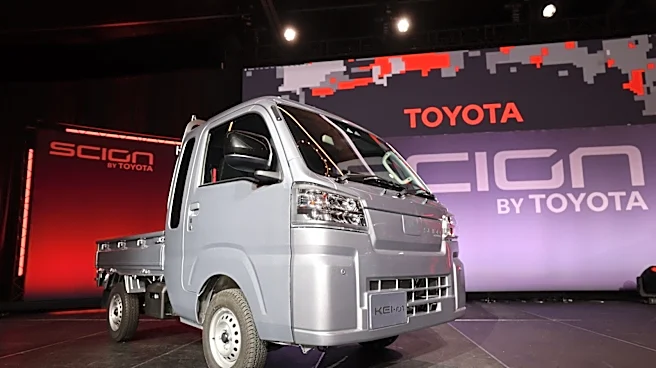
Toyota Motor North America has announced the revival of its Scion brand with the introduction of the KEI-01 ultra-compact utility truck. This new model, unveiled on November 9, 2026, at simultaneous events in Ypsilanti Township, Michigan, and Frisco,
Texas, marks Toyota's entry into the commercial low-speed vehicle market in North America. The KEI-01, which is effectively a rebadged Daihatsu Hijet Truck Jumbo, will be assembled at Toyota Motor Manufacturing Indiana starting in the second half of 2027. Toyota is investing $34 million in new assembly operations, creating approximately 50 new jobs. The vehicle is designed for fleet customers, including farms, campuses, municipalities, and delivery services, and is built to the federal low-speed vehicle standard, capping its top speed at 25 mph. It features a 660cc three-cylinder engine, a continuously variable transmission (CVT), selectable four-wheel drive, and a three-way fold-down bed with a payload capacity of up to 600 pounds. The KEI-01 will have right-hand drive, consistent with its Japanese counterpart.
Why It's Important?
The introduction of the Scion by Toyota KEI-01 signifies a strategic move by Toyota to tap into a niche market for low-speed utility vehicles in the U.S. This initiative could provide a new, federally compliant option for businesses and organizations requiring compact, efficient vehicles for specific operational needs, such as on large properties or for local deliveries. The investment in Indiana for assembly operations underscores Toyota's commitment to U.S. manufacturing and job creation, albeit on a smaller scale. For consumers, while initial sales are fleet-focused, the potential for future limited retail sales could introduce a new category of affordable, practical vehicles, contrasting with the prevailing trend of larger pickups and SUVs. This could also influence state-level regulations regarding low-speed vehicles, potentially standardizing their use and titling across more states. The KEI-01's design, adhering to federal low-speed vehicle standards, differentiates it from imported, older kei trucks, offering a new, warrantied option for specific use cases.
What's Next?
Assembly of the Scion KEI-01 is scheduled to begin in the second half of 2027 at Toyota Motor Manufacturing Indiana. Initial sales will target fleet customers through a select group of Toyota dealers. Toyota plans to use this pilot program to gather data on how U.S. customers utilize the vehicle, which will inform potential future decisions regarding broader retail sales. The company has not yet announced pricing, horsepower, curb weight, or towing ratings, which will be critical details for prospective buyers. The success of the KEI-01 in the fleet market could pave the way for more diverse low-speed vehicle offerings in the U.S. and potentially influence regulatory discussions at the state level regarding the use and classification of such vehicles. The re-establishment of the Scion brand as a 'freedom lab' suggests Toyota may use it to explore other unconventional mobility solutions.
Beyond the Headlines
The revival of the Scion brand with a niche utility vehicle like the KEI-01 reflects a broader industry trend of automakers exploring specialized segments and alternative mobility solutions beyond traditional passenger cars and large trucks. This move could signal a shift towards more diverse vehicle offerings tailored to specific functional needs, potentially driven by evolving urban planning, environmental considerations, and the demand for more efficient last-mile delivery options. The KEI-01's right-hand drive configuration, while common in its Japanese donor model, might present a unique adaptation challenge or opportunity for U.S. users, particularly in a commercial context. Furthermore, the emphasis on low-speed vehicles highlights a potential regulatory pathway for introducing smaller, more affordable vehicles into the U.S. market, bypassing some of the more stringent safety and emissions standards applied to highway-speed vehicles. This could open doors for other manufacturers to introduce similar vehicles, fostering a new sub-segment in the U.S. automotive landscape.