









What's Happening?
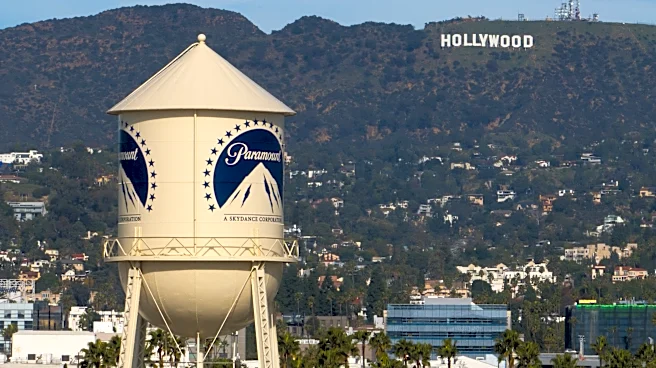
A coalition of twelve states, led by California's Attorney General Rob Bonta, has filed a lawsuit to prevent the merger between Paramount and Warner Bros. Discovery. The lawsuit, submitted to the U.S. District Court for the Northern District of California,
challenges the $110 billion acquisition, which was agreed upon in February following a competitive bidding process involving Netflix. The states argue that the merger would create a dominant entity in the film and TV industries, potentially harming movie theaters, cable distributors, and audiences by reducing competition. Despite the Justice Department's Antitrust Division clearing the merger, the states are seeking a preliminary injunction to halt the merger while pursuing their antitrust claims. Paramount has responded by stating that the lawsuit misrepresents the current competitive landscape and insists that the merger would enhance competition against major streaming platforms.
Why It's Important?
The lawsuit highlights significant concerns about media consolidation and its impact on competition within the entertainment industry. If the merger proceeds, it could lead to increased prices and reduced content diversity for consumers, as well as potential job losses in the entertainment sector. The case underscores the ongoing tension between state and federal authorities over antitrust enforcement, particularly in the rapidly evolving media landscape. The outcome of this legal battle could set a precedent for future mergers and acquisitions in the industry, influencing how media companies strategize their growth and competitive positioning.
What's Next?
The legal proceedings will determine whether the merger can proceed or if it will be blocked by the courts. Paramount has vowed to fight the lawsuit vigorously, arguing that delays could harm entertainment workers and the industry at large. The case may prompt further scrutiny of large-scale mergers in the media sector, potentially influencing regulatory approaches and corporate strategies. Stakeholders, including other media companies and consumer advocacy groups, will likely monitor the case closely, as its outcome could have far-reaching implications for the industry's competitive dynamics.