









What's Happening?
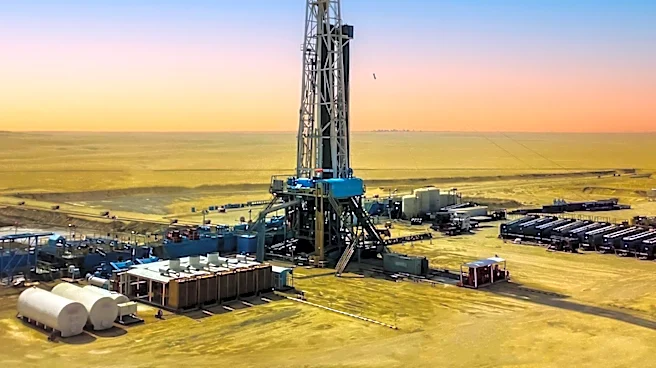
Econ One, an economic consulting firm, highlights the critical role of engineering support in conducting accurate damages analysis within the oil and gas industry. Technical questions often arise in disputes involving wells, facilities, pipelines, or reservoirs,
where parties may disagree on aspects such as well relevance, production allocation, achievable production, or operational constraints. When these technical issues significantly impact the damages analysis, an engineering review can provide a credible foundation for the assumptions used in economic models. For example, in a directional drilling dispute, Econ One's experts utilized directional survey data, well trajectories, and lease boundaries to narrow down the number of relevant wells from 70 to 30, providing a more supportable basis for evaluating production and financial loss.
Why It's Important?
The integration of engineering expertise into economic damages analysis is crucial for ensuring the accuracy and defensibility of claims in the complex oil and gas sector. Disputes in this industry often involve highly technical details that can significantly influence financial outcomes. Without specialized engineering input, economic models might rely on unsupported assumptions, leading to inaccurate damage estimates. This interdisciplinary approach helps identify the true scope of financial loss by clarifying technical aspects such as production capability, operational constraints, and equipment performance. For U.S. oil and gas companies, legal firms, and regulatory bodies, this means more robust and credible damages assessments, which can impact litigation outcomes, settlement negotiations, and regulatory compliance. It also helps prevent over- or under-estimation of damages, fostering fairer resolutions in disputes.
What's Next?
The trend of integrating engineering support into economic damages analysis is expected to continue and expand within the oil and gas industry. As technology advances and disputes become more complex, the need for specialized technical reviews will likely increase. Economic consulting firms like Econ One will continue to develop in-house engineering capabilities or foster strong collaborations with engineering experts to address these evolving needs. This approach will become a standard practice for any significant damages analysis in the sector, ensuring that all technical nuances are thoroughly considered. Furthermore, this collaboration could lead to the development of more sophisticated analytical tools and methodologies that combine engineering and economic principles to provide even more precise and comprehensive assessments.
Beyond the Headlines
The emphasis on engineering support in damages analysis reflects a broader recognition of the interconnectedness of technical and financial realities in modern industries. It highlights that in sectors like oil and gas, where operations are inherently complex and capital-intensive, a purely financial perspective is insufficient for accurate assessment. This interdisciplinary approach fosters a more holistic understanding of disputes, moving beyond legal arguments to incorporate the underlying operational and scientific facts. It also underscores the ethical imperative of ensuring that financial claims are grounded in verifiable technical evidence, promoting fairness and transparency in legal and commercial proceedings. This model of integrated expertise could serve as a blueprint for other technically driven industries facing similar challenges in dispute resolution and economic valuation.