







What's Happening?
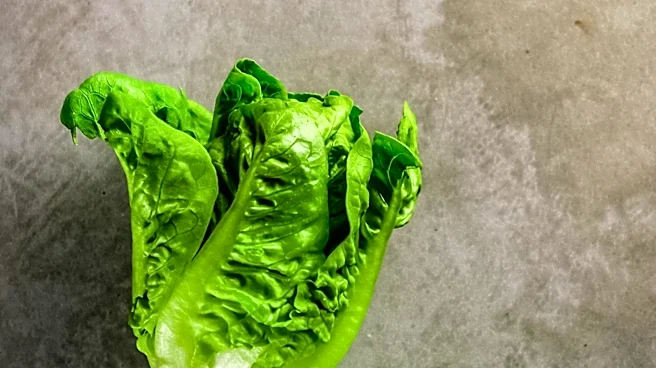
Researchers at Imperial College London have genetically modified lettuce and tobacco plants to produce myoglobin, a protein typically found in animal muscle. This development is part of an effort to create more sustainable sources for plant-based meat
products. Myoglobin, which gives meat its red color and umami flavor, was introduced into the chloroplasts of these plants using a gene gun. The study, published in Frontiers in Plant Science, demonstrated that chloroplasts are particularly effective at producing myoglobin due to their bacterial origins and the abundance of chloroplast genomes in plant cells. The researchers achieved a myoglobin yield of approximately 800 milligrams per kilogram of dry tobacco and 810 milligrams per kilogram of dry lettuce, which is significantly higher than yields from nuclear genome insertion. This innovation could potentially reduce the environmental impact of livestock farming by providing a plant-based alternative to animal proteins.
Why It's Important?
The engineering of plants to produce myoglobin represents a significant advancement in the development of sustainable meat alternatives. Livestock farming is a major contributor to environmental issues such as land use, water consumption, and greenhouse gas emissions. By using plants as biological factories for animal proteins, this technology could reduce the ecological footprint of meat production. The potential to produce large amounts of protein per hectare with less water and fewer emissions could transform the meat-alternative market, which is already experiencing rapid growth. This innovation not only addresses environmental concerns but also caters to consumer demand for ethical and sustainable food sources.
What's Next?
The next steps involve scaling the technology for commercial production. Researchers suggest that myoglobin can be isolated from plant leaves and purified using conventional industrial methods. If successful, this could lead to the integration of plant-produced myoglobin into plant-based meat products, enhancing their color, flavor, and nutritional value. Additionally, genetically engineered lettuce could be developed as a heme iron-enriched food, pending regulatory approval. While the study is currently a proof of concept, it opens the door for further research and development in plant-based protein production.