






What's Happening?
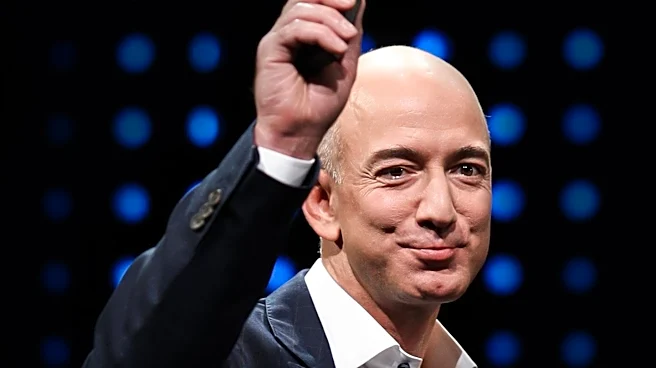
Former Amazon VP Ethan Evans revealed insights into Jeff Bezos's management style, characterizing him as highly demanding and rarely offering praise, even for strong results. Speaking on the 'My First Million' podcast, Evans recounted instances where
Bezos would quickly identify flaws in presentations, challenge executives, and sometimes embarrass employees. According to Evans, Bezos would often acknowledge an idea but immediately point out areas for improvement, expecting teams to act on them. This constant criticism, regardless of team performance, was a consistent aspect of working under Bezos. Evans noted that Bezos's approach was not mean-spirited but focused intensely on achieving exceptional outcomes.
Why It's Important?
This account provides a critical perspective on the leadership that built one of the world's largest companies, Amazon. For U.S. businesses and aspiring leaders, it highlights the potential trade-offs between a demanding, results-oriented culture and employee morale. While Bezos's style undeniably drove innovation and growth, it also created an environment of intense pressure and limited positive reinforcement. This raises questions about sustainable leadership practices and employee well-being in high-performance organizations. Understanding this dynamic is crucial for companies seeking to replicate Amazon's success while also fostering a supportive work environment. It also informs discussions on corporate culture and the psychological impact of leadership styles on the workforce.
What's Next?
The insights from Ethan Evans contribute to ongoing discussions about effective leadership and corporate culture in the U.S. business landscape. Companies may increasingly evaluate their leadership training programs to balance demanding performance expectations with constructive feedback and recognition. This could lead to a greater emphasis on emotional intelligence and communication skills for managers. Furthermore, the narrative might influence how employees perceive and choose workplaces, potentially favoring companies that offer a more balanced approach to performance management. The revelations could also spark further academic research into the long-term effects of such demanding leadership styles on employee retention, innovation, and overall organizational health.
Beyond the Headlines
Beyond the immediate impact on management practices, Evans's description of Bezos's style touches on deeper cultural implications within the tech industry and beyond. It underscores a prevalent belief that relentless criticism and a focus on flaws are necessary drivers of innovation and excellence. This perspective can inadvertently normalize high-pressure environments where positive reinforcement is scarce. The ethical dimension arises in considering the psychological toll on employees and whether such a culture is sustainable or desirable in the long run. It also prompts reflection on the definition of 'success' in business—is it purely financial gain, or does it encompass employee well-being and a positive work environment? This narrative contributes to a broader societal conversation about the human cost of corporate ambition.