






What's Happening?
Leaked Deutsche Bank documents indicate that Nailya Asker-zade, partner of VTB head Andrei Kostin, and Olga Gruzdeva, wife of billionaire Vladimir Gruzdev, were investors in Pavel Durov's Telegram Open Network (TON) cryptocurrency project. These revelations
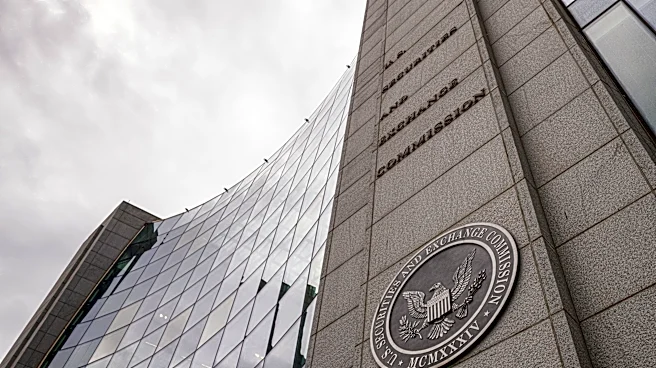
come from an internal report compiled by Deutsche Bank's financial crime unit in 2019, as part of a global media investigation called 'Inside Deutsche Bank.' The report, requested by the bank's wealth management unit, sought information on Durov, his project, and its investors. Olga Gruzdeva reportedly invested $40 million in TON, while Asker-zade's investment amount was not disclosed, though the minimum for the second round of the Initial Coin Offering (ICO) was $1 million. The TON project, which aimed to raise $1.7 billion, ultimately failed after the U.S. Securities and Exchange Commission (SEC) deemed the sale of tokens illegal, leading to litigation in 2019 and 2020 and requiring Durov to return over $1 billion to investors. Despite Durov's public statements about leaving Russia and refusing cooperation with authorities, he made over 50 visits to the country between 2015 and 2021, particularly during the SEC's actions against TON.
Why It's Important?
The involvement of individuals connected to influential Russian figures, such as the head of state-owned VTB bank and a former governor with ties to Rosneft head Igor Sechin, in a U.S.-regulated cryptocurrency project highlights potential geopolitical and financial complexities. The SEC's intervention in Telegram's TON project underscores the U.S. regulatory body's broad reach and its commitment to enforcing securities laws, even for projects with international investors. This case serves as a significant precedent for how U.S. authorities view and regulate digital assets, particularly those offered through ICOs. The failure of TON, despite raising substantial capital, demonstrates the inherent risks and regulatory challenges in the nascent cryptocurrency market. Furthermore, the reported financial assistance from VTB Capital to Telegram in 2021, following the SEC's actions, suggests a complex interplay between Russian state-affiliated financial institutions and a company that faced U.S. regulatory scrutiny. This situation could raise questions about the transparency and due diligence processes within international financial institutions like Deutsche Bank when dealing with high-profile, politically connected investors.
What's Next?
The revelations from the leaked Deutsche Bank documents could prompt further scrutiny from financial regulators, particularly in the U.S., regarding the due diligence practices of banks involved in cryptocurrency investments, especially those with ties to politically exposed persons. While the TON project has already failed and settled with the SEC, the exposure of these specific investors could lead to renewed interest in their financial dealings and the origins of their wealth. The ongoing global media investigation, 'Inside Deutsche Bank,' may uncover additional information that could impact the reputations of individuals and institutions mentioned. For the cryptocurrency market, this case reinforces the need for projects to meticulously adhere to regulatory frameworks, particularly those in the U.S., to avoid similar legal and financial setbacks. The broader implications for international financial transparency and the monitoring of funds from politically connected individuals remain a key area of focus for regulatory bodies worldwide.
Beyond the Headlines
The involvement of individuals like Nailya Asker-zade and Olga Gruzdeva in the TON project, given their connections to powerful Russian figures, raises deeper questions about the intersection of wealth, political influence, and emerging financial technologies. The fact that these investments were flagged by Deutsche Bank's financial crime unit suggests an awareness of potential risks, including those related to money laundering or sanctions. This scenario highlights the ethical and legal challenges faced by global financial institutions in vetting investors, especially when dealing with individuals from jurisdictions with less transparent financial systems. The case also subtly touches upon the broader narrative of Russian capital seeking investment opportunities globally, and the scrutiny such investments attract from Western regulatory bodies. The failure of TON, partly due to U.S. regulatory action, underscores the significant power of U.S. financial oversight to impact global ventures, regardless of their origin or primary investor base. This incident contributes to the ongoing debate about the need for robust international cooperation in financial regulation to prevent illicit financial flows and maintain market integrity.