






What's Happening?
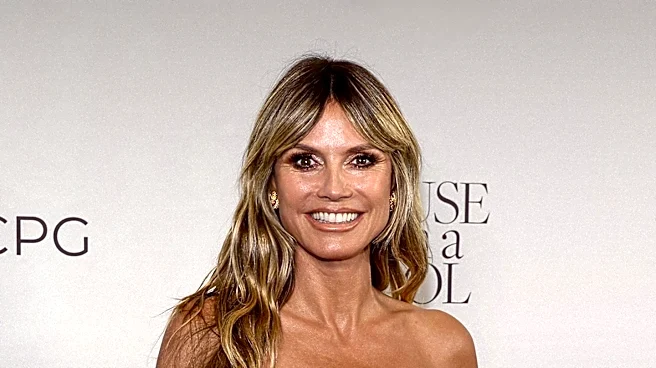
Heidi Klum is the face of s.Oliver's new 'Casual Since Forever' campaign, which uniquely features an AI-generated younger version of herself from the 1990s. The campaign includes a video and images where the present-day Klum interacts with her younger self,
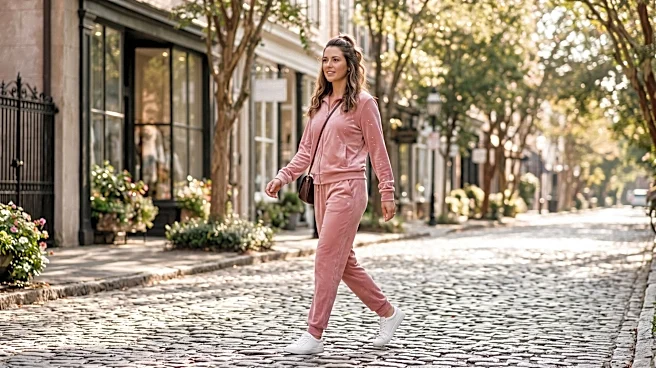
aiming to highlight the brand's consistent casual style over time. The 1990s setting is significant as it marks the beginning of Klum's career and aligns with s.Oliver's Vintage Collection, which reinterprets typical 90s fashion elements like sportswear, loose fits, denim, and prominent logos. s.Oliver explicitly states that Klum is a brand face and not a designer for the collection. The campaign's goal is to sharpen s.Oliver's positioning as a casual brand by leveraging Klum's personal history and the nostalgic appeal of the 90s, while also driving sales through direct product presentation and a sweepstakes for card members.
Why It's Important?
This campaign is important for the fashion and advertising industries as it showcases an innovative use of artificial intelligence to create compelling narratives. By digitally reconstructing a younger Heidi Klum, s.Oliver demonstrates how AI can be integrated into marketing strategies to convey messages of evolution and timelessness for both individuals and brands. This approach could set a precedent for future celebrity endorsements, where AI might be used to create dynamic and historically resonant content, potentially reducing the need for extensive archival footage or complex re-enactments. The campaign also highlights the growing trend of nostalgia in fashion, particularly for the 1990s, and how brands are capitalizing on this sentiment to connect with consumers across different generations. The explicit labeling of AI-generated content, while present, also raises questions about transparency and authenticity in advertising, which could influence consumer trust and regulatory discussions.
What's Next?
The s.Oliver campaign will continue to roll out across various platforms, including online shops, social media, and potentially in-store promotions, with a focus on converting the generated attention into sales for the Vintage Collection. The brand will likely monitor the campaign's effectiveness in enhancing its casual brand image and driving consumer engagement. Other fashion brands and advertisers may observe this campaign closely to assess the viability and impact of using AI to create 'younger' versions of celebrities or historical figures in their own marketing efforts. Discussions around the ethical implications and transparency requirements for AI-generated content in advertising are also likely to evolve, potentially leading to industry guidelines or consumer protection measures regarding the clear disclosure of such technologies in promotional materials.
Beyond the Headlines
The use of AI to create a younger Heidi Klum touches upon deeper implications concerning the perception of authenticity and the manipulation of reality in media. While s.Oliver labels the AI-generated images, the campaign still presents a curated and idealized version of the past, which is common in advertising but amplified by AI's capabilities. This raises questions about how consumers will distinguish between genuine historical representation and AI-enhanced narratives, and the potential for AI to create entirely fabricated histories for marketing purposes. Furthermore, the campaign highlights the increasing blurring of lines between technology and creativity, where AI acts not just as a tool for efficiency but as a creative partner in storytelling. This could lead to a re-evaluation of intellectual property rights and the definition of 'original content' in an era where AI can seamlessly generate new versions of existing personalities or historical moments.