




What's Happening?
Formula 1 teams, including Red Bull, Ferrari, and McLaren, have brought circuit-specific upgrades to the Mexican Grand Prix. These modifications are primarily focused on addressing the unique cooling challenges presented by the high altitude of the Autodromo
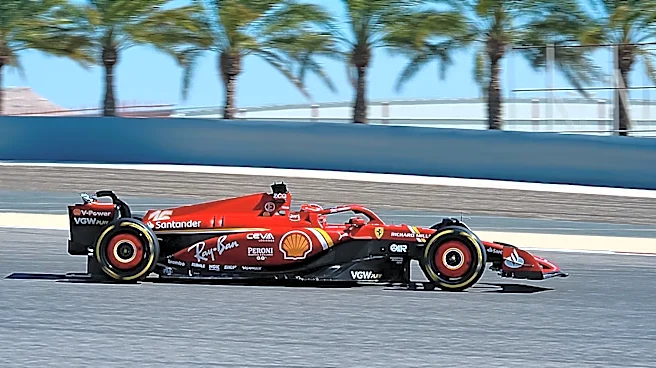
Hermanos Rodriguez in Mexico City. The thinner air at this altitude reduces the effectiveness of cooling systems, making temperature management a critical factor. Red Bull has introduced two modifications to its engine cover and sidepods to improve ventilation and airflow. Ferrari has also enlarged the rear opening of its engine cover and added extra ventilation panels on the upper sidepod surfaces. McLaren has modified its ventilation openings to be larger and extend further forward, specifically to enhance power unit cooling.
Why It's Important?
The strategic adjustments made by F1 teams for the Mexican Grand Prix highlight the intricate engineering and tactical considerations required in top-tier motorsport. For U.S. audiences and the broader F1 community, these circuit-specific upgrades demonstrate the continuous innovation and adaptation necessary to compete at the highest level. The focus on cooling, even at the expense of some aerodynamic efficiency, underscores the extreme conditions faced by F1 cars and the importance of reliability. This constant evolution of car design and strategy directly impacts race outcomes, influencing championship battles and the overall excitement of the sport, which has a growing fan base and significant commercial interests in the United States.
What's Next?
The effectiveness of these cooling-focused upgrades will be closely monitored during the practice sessions, qualifying, and the race itself at the Mexican Grand Prix. Teams will analyze data to determine if the modifications successfully managed engine and component temperatures without significantly compromising aerodynamic performance. The insights gained from this race will inform future car development and strategic planning for other high-altitude or high-temperature venues. The performance of these upgrades could also influence the competitive landscape for this particular race, potentially shifting the advantage between teams. Engineers and strategists will be working in real-time to optimize car performance based on the data collected.
Beyond the Headlines
The emphasis on cooling for the Mexican Grand Prix reveals a deeper aspect of Formula 1 engineering: the constant trade-off between various performance parameters. While aerodynamic efficiency is often paramount, conditions like high altitude force teams to prioritize other factors, such as thermal management. This highlights the multidisciplinary nature of F1, where mechanical, aerodynamic, and strategic considerations must be meticulously balanced. The ability of teams to adapt quickly to diverse track conditions is a testament to their technological prowess and operational efficiency. This continuous problem-solving and innovation also have broader implications for automotive engineering, pushing the boundaries of material science and thermal dynamics.