


What's Happening?
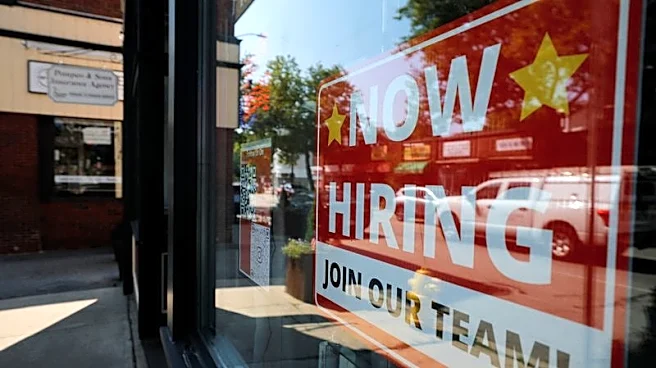
The Federal Reserve is under heightened scrutiny as it prepares for the release of key inflation data next week, following a surprising jobs report that showed a loss of 23,000 nonfarm payroll jobs in July. Despite the job losses, the unemployment rate
decreased slightly to 4.1%, leading investors to speculate that the Federal Reserve might hold off on raising interest rates in September. The upcoming release of the Consumer Price Index (CPI) and Producer Price Index (PPI) for July is expected to play a crucial role in shaping the Fed's monetary policy decisions. Economists predict a 3.4% year-over-year increase in the CPI, slightly lower than June's 3.5% but still above the Fed's 2% target. The market is closely watching these figures, as an unexpectedly high inflation report could signal stagflation, forcing the Fed to consider rate hikes despite a weakening economy.
Why It's Important?
The upcoming inflation data is critical for the Federal Reserve's decision-making process, as it balances its dual mandate of ensuring full employment and stable prices. The recent jobs report has added complexity to the Fed's task, as it suggests potential weaknesses in consumer spending. A high inflation reading could lead to stagflation, characterized by persistent inflation and slow economic growth, which would complicate the Fed's policy options. Investors are hopeful for a softer inflation report, which could allow the Fed to maintain current interest rates, providing a more stable environment for economic growth. The outcome of these economic indicators will have significant implications for financial markets, consumer confidence, and the broader U.S. economy.
What's Next?
The Federal Reserve will closely analyze the upcoming CPI and PPI data to determine its next steps in monetary policy. If inflation remains high, the Fed may be compelled to raise interest rates, despite the potential negative impact on economic growth. Conversely, a lower-than-expected inflation report could provide the Fed with the flexibility to keep rates steady, supporting continued economic recovery. Market participants will be watching for any signals from the Fed regarding its policy direction, as well as any developments in geopolitical factors, such as U.S.-Iran relations, which could influence oil prices and, consequently, inflation.