






What's Happening?
A new Training Centre for Smallholder Farmers has been inaugurated in El Rosario, Catazajá, Chiapas, Mexico. This initiative aims to transition Mexico's oil palm sector towards more sustainable production models by improving soil health and strengthening
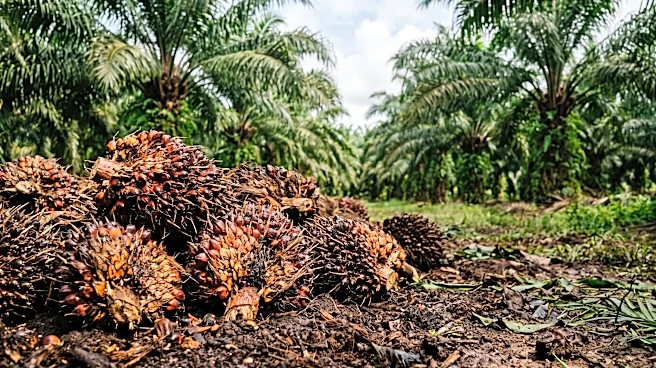
farmers' technical knowledge. The center is a collaborative effort involving the Asociación de Pequeños Productores Mundo Maya, the Holistic Programme, and the Federación Mexicana de Palma de Aceite (FEMEXPALMA), with active participation from the Roundtable on Sustainable Palm Oil (RSPO). It functions as a community-based agro-innovation space, making technical knowledge accessible and promoting regenerative agriculture through organic input production and circular economy principles. The program has already yielded tangible results across 56 hectares of oil palm plantations, including the production of 32,400 liters of biol, 6,900 liters of leachate, and 12.8 tonnes of vermicompost. Additionally, it has introduced the cultivation of edible mushrooms using oil palm empty fruit bunches, providing a productive use for biomass and diversifying income for local families.
Why It's Important?
This initiative is important for the U.S. as it contributes to the global supply chain of sustainable palm oil, a commodity used in numerous products imported into the U.S. By fostering sustainable practices in Mexico, it helps ensure the long-term viability of palm oil production while mitigating environmental impacts such as deforestation and soil degradation. The adoption of regenerative agricultural practices can lead to more resilient supply chains, reducing the risk of price volatility and supply disruptions that could affect U.S. businesses and consumers. Furthermore, the involvement of international organizations like the RSPO and multinational corporations such as PepsiCo, Nestlé, and Cargill, highlights a growing commitment to corporate social responsibility and sustainable sourcing, which aligns with increasing consumer demand in the U.S. for ethically produced goods. The program's success in Mexico could also serve as a model for other agricultural sectors in neighboring regions, potentially influencing broader sustainability trends that impact U.S. trade and environmental policies.
What's Next?
The program aims to support the replication of soil conservation and bio-input production practices in other oil palm-growing regions across Mexico. This expansion will further strengthen an agricultural management approach based on technical knowledge, practical experience, and long-term sustainability. The involvement of the Holistic Programme partners, including major U.S. and international companies, suggests continued investment and support for these initiatives. The farmer-to-farmer knowledge transfer model is expected to empower more local producers, transforming rural communities and encouraging the widespread adoption of regenerative agricultural practices. Future developments will likely include monitoring the environmental and economic impacts of these expanded practices, assessing their contribution to biodiversity conservation, and evaluating the socio-economic benefits for smallholder farmers. The success of this model could also influence policy discussions around sustainable agriculture and trade agreements between the U.S. and Mexico.
Beyond the Headlines
Beyond the immediate agricultural benefits, this initiative addresses deeper ethical and environmental concerns associated with palm oil production. Historically, palm oil has been linked to deforestation, habitat loss, and social conflicts. By promoting sustainable practices and empowering smallholder farmers, the program helps to counteract these negative impacts, fostering a more equitable and environmentally responsible industry. The focus on circular economy principles, such as using agricultural waste for mushroom cultivation, exemplifies innovative approaches to resource management and waste reduction. This model also highlights the critical role of knowledge transfer and community-based learning in achieving sustainable development goals. It underscores the interconnectedness of global supply chains and the shared responsibility of producers, consumers, and corporations in addressing complex environmental and social challenges. The long-term shift towards sustainable oil palm production in Mexico could set a precedent for other agricultural sectors, demonstrating how collaborative efforts can drive positive change on a global scale.