






What's Happening?
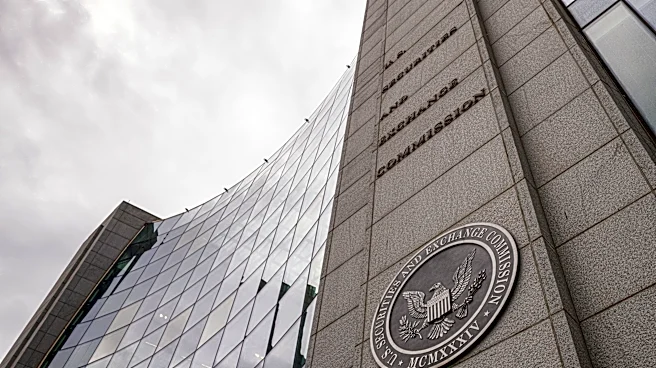
Gary Gensler, former Chair of the U.S. Securities and Exchange Commission (SEC), has issued a warning that the substantial investment influx into the artificial intelligence (AI) sector could form a market bubble. This situation, he suggests, might lead
to a significant market correction and potentially an economic recession in the United States before the 2028 presidential election. Gensler draws parallels to the dot-com bubble of the early 2000s, though he believes it is unlikely to reach the severity of the 2008 global financial crisis. According to Al Arabiya Business, annual spending on AI infrastructure, including data centers and advanced chips, is nearing $800 billion. Major technology firms are dramatically increasing their investments, but Gensler notes that this capital inflow is outstripping actual revenue and profit growth, creating financial imbalances. He also highlighted that some financing models in the sector rely on high borrowing and complex financial arrangements, potentially obscuring genuine risks.
Why It's Important?
The warning from a former SEC Chair like Gary Gensler carries significant weight for U.S. financial markets and the broader economy. A potential AI bubble burst could lead to substantial losses for investors, particularly those heavily invested in technology and AI-related companies. Such a correction could impact retirement funds, institutional investments, and individual portfolios. An economic recession, as suggested by Gensler, would have widespread consequences, affecting employment, consumer spending, and overall economic stability. Cloud computing firms and specialized infrastructure providers are identified as potentially vulnerable, indicating that the impact could be concentrated within specific segments of the tech industry. The comparison to the dot-com bubble serves as a historical precedent, reminding stakeholders of the potential for rapid market expansion followed by sharp declines, which could lead to bankruptcies and consolidation within the AI sector.
What's Next?
The immediate future will likely involve increased scrutiny of AI investments and the financial health of companies within the sector. Investors and analysts will be closely monitoring revenue growth relative to capital expenditure to identify potential imbalances. Regulatory bodies may also intensify their oversight of financing models and transparency within the AI industry, especially concerning complex financial arrangements and borrowing levels. The debate between those who foresee a bubble and those who believe the AI sector has stronger operational foundations will continue, influencing investment strategies and market sentiment. Companies heavily reliant on AI infrastructure development, such as data center operators and chip manufacturers, may face pressure to demonstrate sustainable profitability. The lead-up to the 2028 presidential election could see economic conditions, including the performance of the AI sector, become a significant political talking point.
Beyond the Headlines
Gensler's warning extends beyond immediate financial implications, touching upon the ethical and structural challenges within the rapidly evolving AI landscape. The massive capital deployment into AI infrastructure raises questions about resource allocation and the potential for market concentration among a few dominant technology firms. The reliance on complex financial arrangements could also mask systemic risks, potentially leading to a lack of transparency that could undermine investor confidence. Furthermore, the rapid pace of AI development and investment could create a 'winner-take-all' scenario, where smaller, innovative companies struggle to compete with well-funded giants, potentially stifling broader innovation. The long-term impact on the U.S. workforce, as AI technologies become more pervasive, also remains a critical consideration, with potential shifts in job markets and skill requirements.