



What's Happening?
Tesla recently reported a significant earnings miss, falling short of Wall Street's expectations by approximately 38%. The company's operating profit decreased to $400 million from $923 million a year earlier, and free cash flow turned negative at $1.1
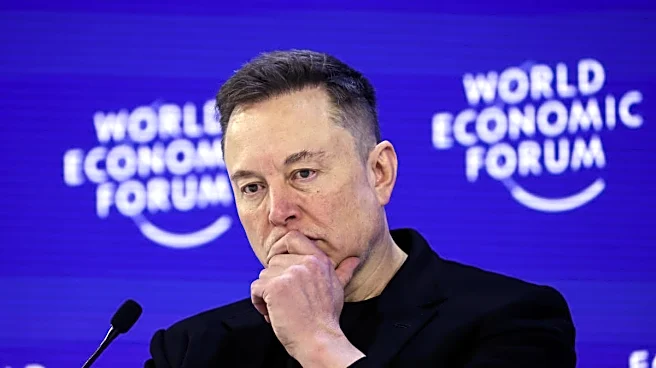
billion due to increased capital spending. Despite these figures, CEO Elon Musk remains optimistic, emphasizing Tesla's investments in autonomous driving, robotaxis, and AI infrastructure. Musk argues that these investments are crucial for future revenue streams, although the automotive business is currently under pressure with declining vehicle pricing and regulatory credit sales.
Why It's Important?
Tesla's current financial performance highlights the challenges of balancing immediate profitability with long-term innovation. The company's valuation heavily relies on the success of its future technologies, such as autonomous vehicles and robotics. Investors are cautious, as these technologies are not yet proven at scale. The market's reaction to the earnings miss underscores the importance of execution over quarterly results. If Tesla succeeds in commercializing its new ventures, it could justify its premium valuation. However, failure to deliver could lead to a reevaluation of Tesla's market position.
What's Next?
Tesla's focus will likely remain on developing its autonomous and AI capabilities. Investors will be watching for tangible progress in these areas, as well as any updates on the deployment of robotaxis and the Optimus humanoid robot. The company's ability to execute on these initiatives will be critical in maintaining investor confidence and supporting its stock valuation.