









What's Happening?
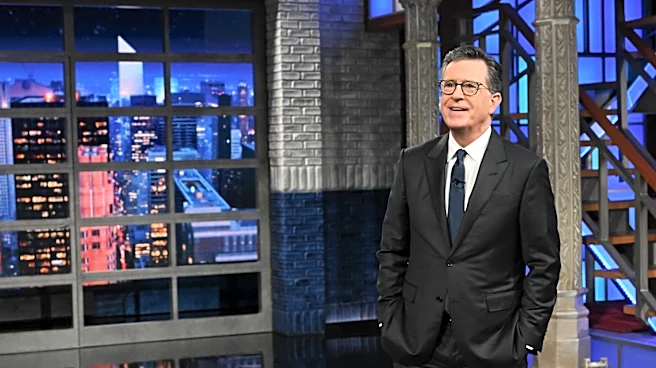
CBS has reached an agreement to pay Lee Mendelson Film Productions, Inc. an undisclosed sum after 'The Late Show With Stephen Colbert' used the Vince Guaraldi composition 'Linus and Lucy' without authorization during its May finale. The proceeds from
this licensing agreement will be donated to Chef José Andrés’ World Central Kitchen, a non-profit organization that provides meals during global crises. The performance of 'Linus and Lucy' was part of a segment where Louis Cato and the Great Big Joy Machine played the song while Stephen Colbert humorously acknowledged the potential cost to CBS. Lee Mendelson Film Productions, which owns the rights to Guaraldi's music, has been actively enforcing its copyrights, filing legal actions against various entities for unauthorized use. The company aims to educate about the necessity of obtaining written licenses for commercial music use.
Why It's Important?
This development underscores the importance of copyright enforcement in the entertainment industry, highlighting the legal and financial implications of unauthorized use of protected works. For CBS, this incident serves as a reminder of the potential costs associated with copyright infringement. The decision to donate the proceeds to World Central Kitchen also reflects a positive outcome, supporting a charitable cause. This case illustrates the broader industry trend of rights holders taking a firm stance on protecting intellectual property, which can influence how media companies approach content usage and licensing agreements. It also emphasizes the role of media companies in supporting social causes through financial contributions.
What's Next?
Lee Mendelson Film Productions is likely to continue its efforts to protect its music catalog, potentially leading to more legal actions against unauthorized use. Media companies may become more vigilant in securing proper licenses to avoid similar situations. The donation to World Central Kitchen could inspire other organizations to consider charitable contributions as part of their resolution strategies in legal settlements. Additionally, this case may prompt discussions within the industry about balancing creative expression with legal compliance, potentially influencing future content production and licensing practices.