





What's Happening?
The U.S. electric vehicle (EV) market is experiencing a shift in competition as Rivian Automotive Inc., Subaru Corp., and Toyota Motor Corp. have introduced new models this year, capturing a larger share of the market. This comes as the overall American
EV market regains momentum, with U.S. consumers purchasing 83,300 new electric cars and trucks in October, an 11% increase over October 2025. Despite this growth, EV inventory at dealerships has faltered, with current stock levels significantly lower than a year ago. Tesla Inc. continues to dominate the U.S. EV market, holding a 58% share, an increase from 54% a year prior. The scarcity of affordable EV models is a notable concern, as carmakers often prioritize selling higher-priced trims. The expiration of federal purchase incentives in September of the previous year initially led automakers to reduce EV production, contributing to the current low inventory.
Why It's Important?
The evolving landscape of the U.S. EV market has significant implications for consumers, automakers, and the broader economy. The entry of new models from Rivian, Subaru, and Toyota intensifies competition, potentially leading to more diverse options and competitive pricing for consumers in the long run. However, the current low inventory of EVs, particularly affordable models, means that consumer demand is not being fully met, as highlighted by Gil Tal, director of the Electric Vehicle Research Center at UC Davis. This unmet demand could slow the transition to electric vehicles, despite growing interest driven by factors like rising gas prices. Legacy carmakers have struggled to make EVs profitable, often prioritizing gas-burning vehicles, which remain more lucrative. This strategy, while maximizing immediate revenue for manufacturers, may put U.S. consumers seeking affordable EV options at a disadvantage and hinder environmental goals.
What's Next?
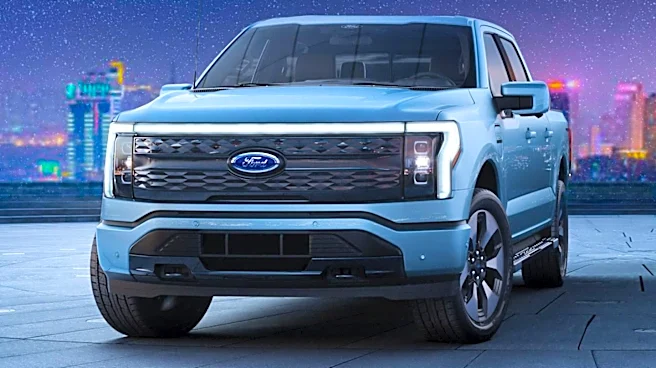
The future of the U.S. EV market will largely depend on how quickly automakers can ramp up production to meet demand and whether they prioritize the availability of affordable models. Ford, for instance, plans to launch an affordable electric pickup next year, anticipating that the current scarcity of options bodes well for its success. General Motors has indicated it is producing EVs in line with customer demand and is focused on optimizing its lineup for profitability, while also preparing for potential increases in EV penetration due to higher oil prices. Industry experts like Stephanie Valdez Streaty, director of industry insights at Cox, suggest that the 'natural demand' for EVs is picking up, but the availability of the right mix of affordable models will be crucial, alongside incentives. The market will likely see continued efforts from various manufacturers to gain market share from Tesla, especially as consumer interest in EVs remains high.
Beyond the Headlines
The current state of the U.S. EV market reveals a complex interplay between consumer demand, manufacturing strategies, and economic realities. The struggle of legacy automakers to make EVs profitable, even as battery prices decline, underscores a broader challenge in transitioning from established, profitable internal combustion engine vehicle production to a new, less profitable EV segment. This situation raises questions about corporate responsibility in meeting environmental goals versus maximizing shareholder value. The emphasis on selling higher-priced EV trims, while understandable from a business perspective, creates an accessibility barrier for many consumers, potentially exacerbating economic inequalities in access to cleaner transportation. The long-term success of the EV transition in the U.S. will require not only technological advancements but also strategic shifts in production and pricing to ensure broader market penetration and equitable access.