

What's Happening?
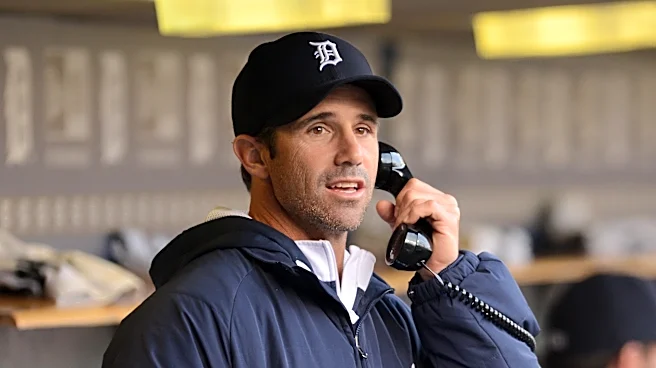
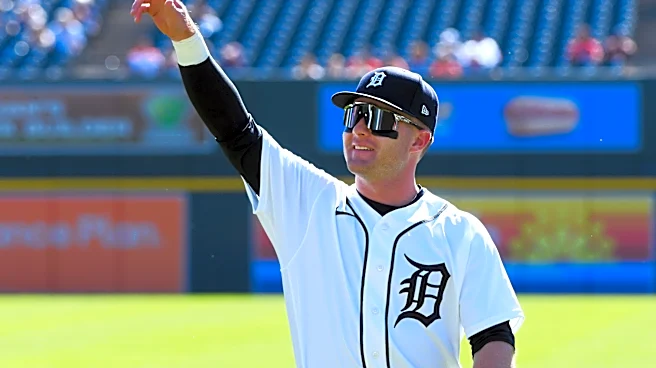
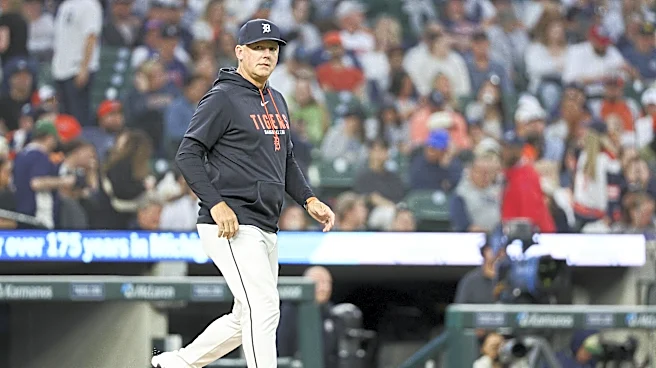
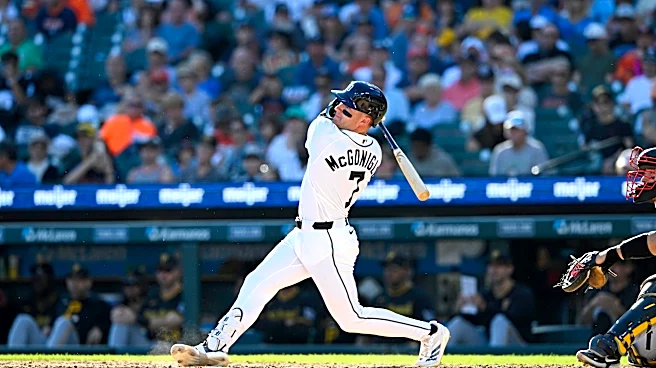
Detroit Tigers manager A.J. Hinch and president of baseball operations Scott Harris have indicated that the team's future roster will be built around Kevin McGonigle, the 2026 American League Jackie Robinson Rookie of the Year. McGonigle, 22, had a historic
debut season, playing 156 games and achieving an .806 OPS with 18 home runs and 72 RBIs. He demonstrated significant defensive flexibility, splitting time between third base and shortstop, positions he had not played professionally before 2026. Hinch and Harris value this versatility and do not plan to assign him a single fixed position for the 2027 season. McGonigle's performance earned him 28 of 30 first-place votes for the Rookie of the Year award, making him the sixth Tiger to win it and the first position player since Lou Whitaker in 1978. His 7.1 Wins Above Replacement (WAR) led the entire American League, a feat not achieved by a rookie since Mike Trout in 2012. The Tigers will also receive an extra pick in the 2027 draft due to MLB's Prospect Promotion Incentive, a direct benefit from McGonigle's success.
Why It's Important?
The decision by manager A.J. Hinch to build the Detroit Tigers' future around Kevin McGonigle signifies a strategic shift towards a youth-centric core. This approach is crucial for the Tigers, who finished the 2026 season with a 76-86 record despite McGonigle's individual brilliance. By prioritizing McGonigle's development and versatility, the team aims to establish a long-term competitive foundation. His ability to play multiple infield positions offers significant tactical advantages, allowing Hinch greater flexibility in lineup construction and defensive alignments. The financial implications are also notable; McGonigle signed an eight-year, $150 million extension early in his rookie season, demonstrating the organization's commitment. His success also brings tangible benefits through MLB's Prospect Promotion Incentive, providing the Tigers with an additional draft pick, which can further bolster their farm system and future talent pool. This strategy could attract other talented players to Detroit, viewing McGonigle as a cornerstone for a winning culture.
What's Next?
For the 2027 season, the Detroit Tigers will focus on integrating Kevin McGonigle into a cohesive offensive foundation alongside other young talents like catcher Dillon Dingler, outfielder Riley Greene, first baseman Spencer Torkelson, and fellow 2026 rookie Max Clark. Manager A.J. Hinch will continue to utilize McGonigle's defensive flexibility, allowing him to play both third base and shortstop without a fixed position. The primary challenge for McGonigle will be navigating the 'sophomore test,' as pitchers will have had an offseason to study his tendencies. Analysts anticipate that his elite plate discipline, rather than a single hot streak, will be key to his continued success. The organization's goal is not necessarily for McGonigle to surpass his 7.1 WAR debut, which would be an exceptionally high bar, but to demonstrate consistency and prove that his rookie season was indicative of his true skill level. The team's overall performance in 2027 will be a critical indicator of whether McGonigle's individual success can translate into collective team improvement.
Beyond the Headlines
The Detroit Tigers' commitment to building around Kevin McGonigle reflects a broader trend in Major League Baseball where teams are increasingly investing in and prioritizing young, versatile talent. This strategy moves beyond traditional positional roles, emphasizing players who can contribute in multiple facets of the game, both offensively and defensively. McGonigle's rapid ascent from Double-A to an All-Star start and a significant contract extension highlights the accelerated development pathways for elite prospects in modern baseball. His success also underscores the effectiveness of MLB's Prospect Promotion Incentive, which rewards teams for developing and promoting top-tier talent, thereby encouraging competitive integrity and player development across the league. This approach could influence other organizations to similarly fast-track their top prospects and embrace positional flexibility, potentially leading to more dynamic and adaptable team rosters across MLB. The long-term success of this strategy in Detroit could serve as a blueprint for other franchises aiming to rebuild and compete.