




What's Happening?
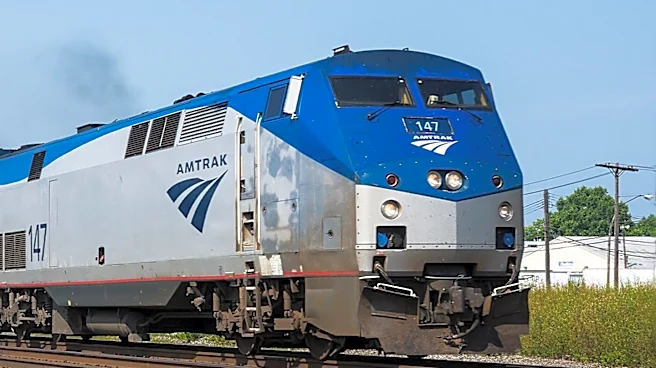
Amtrak's Acela service provides a high-speed rail option connecting New York Penn Station and Baltimore Penn Station. This flagship service is designed for travelers prioritizing speed and comfort, featuring fewer stops and higher top speeds compared
to the Northeast Regional service. Acela trains offer spacious seating, robust Wi-Fi, and a quieter atmosphere, making it suitable for business travelers. The average travel time between New York and Baltimore on Acela is approximately 2 hours and 15 minutes. Tickets for Acela are dynamically priced and are generally more expensive, especially for last-minute bookings, but can be significantly cheaper when purchased 2-4 weeks in advance. Passengers can use eTickets on their smartphones for boarding, and trains are equipped with power outlets and complimentary basic Wi-Fi.
Why It's Important?
The Acela service plays a crucial role in connecting two major East Coast urban centers, New York City and Baltimore, offering an efficient alternative to driving or regional air travel. For business travelers, the Acela's amenities like high-speed Wi-Fi and a quiet environment facilitate productivity during transit, potentially boosting economic activity by enabling more efficient travel for professionals. The service helps alleviate congestion on the I-95 corridor, a notoriously busy route, and offers a more environmentally responsible travel option due to rail's lower carbon footprint per passenger mile compared to private vehicles. The dynamic pricing model, while potentially costly for last-minute travelers, encourages advance booking, which can help Amtrak manage demand and optimize revenue.
What's Next?
Travelers planning trips between New York and Baltimore should continue to monitor Amtrak's dynamic pricing for Acela tickets, with significant savings available for bookings made 2-4 weeks in advance. Amtrak's eTicket system will remain the primary method for boarding, emphasizing the need for passengers to have digital access to their tickets. The continued operation of Acela as a premium service suggests an ongoing focus on catering to business and time-sensitive travelers along the Northeast Corridor. Future developments may include further enhancements to onboard amenities or adjustments to service frequency based on demand and operational efficiency.
Beyond the Headlines
The Acela's success highlights a broader trend in U.S. transportation towards valuing efficiency and comfort, particularly in densely populated corridors. The preference for rail travel over driving or short-haul flights in this region underscores the potential for high-speed rail to transform intercity travel, reducing reliance on less sustainable modes of transport. The historical context of the New York-Baltimore rail route, tracing back to the Baltimore and Ohio (B&O) Railroad, emphasizes the enduring significance of rail infrastructure in American economic development. The Acela's premium offering also reflects a segmentation in the travel market, where a segment of travelers is willing to pay more for a superior experience, influencing future investment decisions in rail infrastructure and service quality.