





What's Happening?
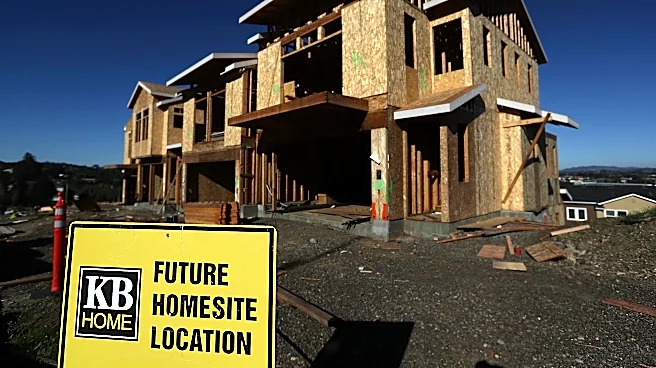
KB Home, a prominent U.S. homebuilder, reported a significant decline in its Q3 2026 financial results. Revenue fell from US$1,620.5 million to US$1,297.1 million, while net income decreased from US$109.1 million to US$65.0 million. This resulted in a drop
in net margin from 6.7% to 5.0%. Despite the company's strategic focus on energy-efficient communities and built-to-order projects, these financial outcomes undercut previous optimistic projections that a smaller top line could still support a 6.8% profitability. The company's stock price has also experienced a 24.9% loss over the past year, trading at US$45.47. This performance has led to a divergence in analyst opinions regarding the company's fair value, with some bullish analysts still seeing value above the current trading price based on the company's built-to-order strategy and California pipeline.
Why It's Important?
The financial performance of major homebuilders like KB Home is a key indicator of the health of the U.S. housing market. A decline in revenue and net income for a company that has built nearly 700,000 homes over its history suggests potential headwinds in the residential construction sector. This could impact various stakeholders, including investors, who have seen a substantial loss in stock value. The shift in net margin also highlights challenges in maintaining profitability amidst changing market conditions. For potential homebuyers, the company's continued focus on energy-efficient and built-to-order projects, particularly in higher-priced West Coast and Bay Area communities, indicates a strategic direction towards premium offerings, which could influence housing availability and affordability in those regions. The discrepancy in analyst views underscores the uncertainty surrounding the future trajectory of the housing market and KB Home's ability to execute its strategy effectively.
What's Next?
For KB Home, the immediate future will involve closely monitoring whether its strategic shift towards approximately 70% built-to-order deliveries and the ramping up of higher-priced West Coast and Bay Area communities will translate into sustained housing gross profit strength. The company will need to demonstrate that these initiatives can prevent further erosion of margins through incentives. Investors will be keenly watching subsequent financial reports to see if the company can reverse the trend of declining revenue and net income. The market's reaction to these future reports will determine if the bullish analyst narrative, which projects a higher fair value, gains traction or if the more pessimistic view, citing risks like weaker first-time buyer demand and rising development costs, prevails. The company's ability to manage costs and maintain pricing power in key markets will be crucial in the coming quarters.
Beyond the Headlines
The performance of KB Home reflects broader economic and demographic trends impacting the U.S. housing market. The emphasis on energy-efficient and built-to-order homes suggests a response to evolving consumer preferences for customization and sustainability, as well as potentially higher regulatory standards. However, the decline in financial metrics despite these strategic shifts indicates that market demand or operational efficiencies may not be fully aligning with these efforts. The challenges faced by KB Home could also signal a potential slowdown in the first-time buyer market, which is often sensitive to interest rates and economic stability. Furthermore, the focus on higher-priced communities in regions like California could exacerbate housing affordability issues, potentially widening the gap between housing supply and demand for different income brackets. This situation highlights the complex interplay between builder strategies, market dynamics, and broader socio-economic factors in the U.S. housing sector.