







What's Happening?
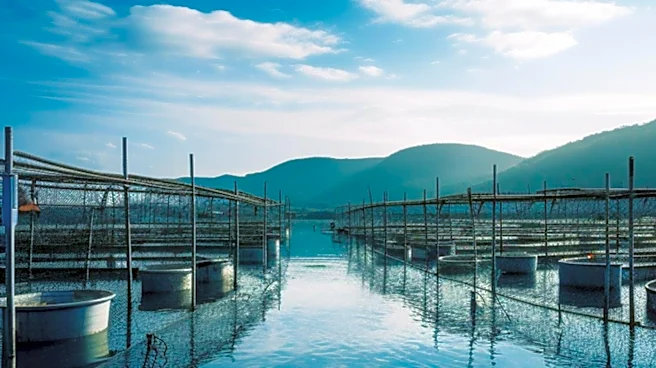
Chile is seeking funding from the Asia-Pacific Economic Cooperation (APEC) to implement a project focused on strengthening sustainable aquaculture production practices. The initiative aims to build capacity in APEC member economies, particularly in Latin
America, regarding responsible antimicrobial use (AMU) and improved husbandry in aquaculture. The project will involve workshops to share knowledge among economies with varying aquaculture production systems. Key objectives include identifying, validating, and transferring effective management practices to optimize AMU, minimize environmental residue risks, and prevent the generation of antimicrobial resistance in water sources. Additionally, the project plans to develop a self-evaluation tool for economies to assess their AMU management and health practices, and create a handbook on good small- and large-scale aquaculture practices to enhance food safety and sustainability. The Chilean Food Safety and Quality Agency (ACHIPIA) will implement the project with collaboration from the World Bank, Intesal Chile, SERNAPESCA, and the Monterey Bay Aquarium.
Why It's Important?
The project addresses critical issues within the APEC region, which accounts for over 80% of global aquaculture production. The sustainable management of aquaculture is vital for both environmental protection and economic prosperity, as the sector provides significant revenue, employment in remote areas, and a crucial source of animal protein. The misuse of antimicrobials in aquaculture poses two major food safety concerns: residues in seafood that can harm public health and environmental contamination leading to antimicrobial resistance (AMR). This AMR can spread to human pathogens, creating a broader public health crisis. By promoting responsible AMU and better husbandry, the project aims to improve food safety, enhance market competitiveness, and ensure the long-term viability of the aquaculture industry. This is particularly important as consumers in developed economies increasingly demand sustainable and safe food products, and APEC economies need to meet these challenges to maintain access to global fish and seafood markets.
What's Next?
The project will proceed with the development and execution of workshops designed to facilitate knowledge sharing among APEC economies. The creation of a self-evaluation tool will enable participating economies to continuously monitor and improve their aquaculture practices. The planned handbook will serve as a practical guide for both small- and large-scale producers, promoting the adoption of best practices. The collaboration with international organizations and expert bodies like the World Bank and the Monterey Bay Aquarium suggests a comprehensive approach to capacity building. The outcomes, including recommendations and best practices, are expected to be disseminated across APEC member economies, contributing to a more harmonized and sustainable approach to aquaculture in the region. This initiative also aligns with global efforts, such as the WHO Global Action Plan against AMR, indicating a commitment to broader public health and environmental goals.
Beyond the Headlines
Beyond the immediate goals of improving aquaculture practices and food safety, this project has deeper implications for regional cooperation and economic development. By fostering knowledge sharing between developed and less developed economies, it aims to reduce technological and regulatory disparities within the APEC region. This collaborative approach can strengthen economic ties and build a sense of community among member economies, as shared expertise and trust are essential for effective knowledge transfer. The focus on sustainable practices and food safety also reflects a growing global awareness of the interconnectedness of human, animal, and environmental health, often referred to as the 'One Health' approach. This project could set a precedent for how international bodies address complex challenges that span economic, environmental, and public health domains, promoting a more resilient and equitable future for the Asia-Pacific region.