






What's Happening?
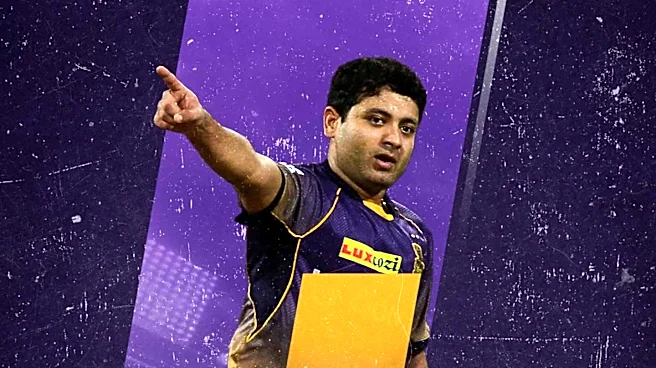
Juhi Chawla, co-owner of the Kolkata Knight Riders (KKR), has publicly endorsed former IPL chairman Lalit Modi's suggestion to move the Indian Premier League (IPL) from its traditional April-May schedule to a January window. Chawla expressed her views
on social media, stating that the IPL has evolved to a point where it should influence the cricket calendar rather than conform to it. She highlighted the benefits of a January schedule, citing 'better conditions, better cricket, and a better experience for everyone overall,' as opposed to playing in the 'harshest heat' of April-May. Lalit Modi had previously argued that the IPL, as a domestic tournament owned by the BCCI, has the autonomy to set its own schedule and should not seek permission for its timing. He compared the IPL's influence to that of the English Premier League in football, suggesting it has the economic and audience power to shape the wider cricketing ecosystem. While there has been some discussion within the BCCI regarding an earlier start in March to avoid late-season rainfall and heat, there is no official confirmation about a shift to January.
Why It's Important?
The proposal to shift the IPL calendar carries significant implications for the global cricketing landscape and the tournament's commercial viability. Moving the IPL to January could alleviate concerns about player welfare and fan comfort during India's intense summer heat, potentially leading to higher quality cricket and increased spectator engagement. Such a move would also assert the IPL's growing influence as a premier global sporting event, challenging existing international cricket schedules and potentially forcing other boards and tournaments to adjust. For franchises like KKR, a more favorable playing season could enhance player performance and reduce injury risks associated with extreme weather. Economically, a January window might open new advertising and sponsorship opportunities, as it would avoid clashes with other major sporting events that typically occur in the April-May period. However, it would also necessitate complex negotiations with international cricket bodies and national boards to ensure player availability, as many international tours and domestic leagues are scheduled during the early part of the year.
What's Next?
While Juhi Chawla's endorsement adds a prominent voice to the discussion, any concrete steps towards rescheduling the IPL would require extensive deliberation and approval from the Board of Control for Cricket in India (BCCI) and its IPL governing council. The BCCI has acknowledged internal discussions about starting the tournament earlier, possibly in March, to mitigate issues related to pre-monsoon rains and high temperatures in May. However, a full shift to January, as proposed by Modi and supported by Chawla, would represent a more radical change. This would likely involve complex negotiations with the International Cricket Council (ICC) and various national cricket boards to create a suitable window that minimizes conflicts with international fixtures and other domestic leagues. Stakeholders, including players, broadcasters, sponsors, and team owners, would need to be consulted to assess the feasibility and potential impact of such a significant calendar alteration. The immediate next steps would likely involve further internal discussions within the BCCI to gauge the appetite for such a change and to explore potential logistical challenges and benefits.
Beyond the Headlines
The debate over the IPL's scheduling reflects a broader power shift in global cricket, where franchise leagues are increasingly asserting their dominance and influence over traditional international cricket. Lalit Modi's argument that the IPL should dictate its own calendar, much like the English Premier League, underscores a growing sentiment that the economic powerhouses of cricket should have more control over the sport's global structure. A successful shift to a January window could set a precedent for other major T20 leagues to demand similar flexibility, potentially leading to a more fragmented international cricket calendar. This could also raise ethical questions about player workload and the balance between national duty and franchise commitments. Furthermore, it highlights the evolving relationship between sports and climate, as extreme weather conditions increasingly force organizers to reconsider traditional scheduling. The discussion also touches upon the cultural significance of the IPL within India, where it has become a major entertainment spectacle, suggesting that its timing should prioritize optimal conditions for both players and fans.