
What's Happening?
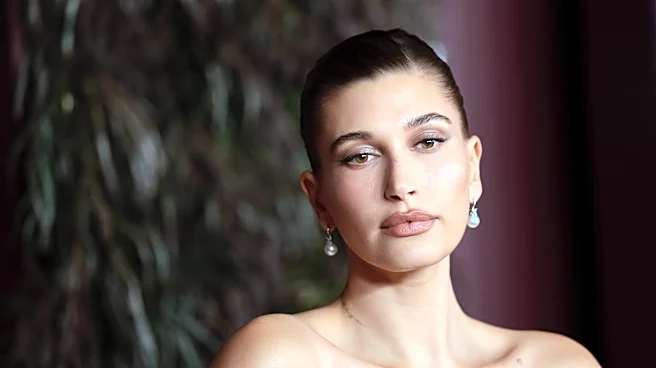
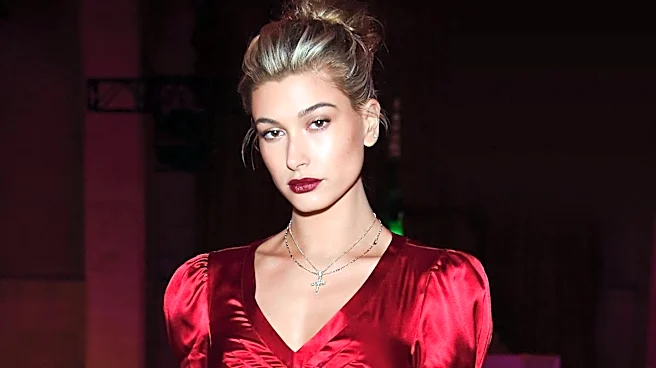
During a recent interview at the DealBook Summit, Hailey Bieber was asked to choose which celebrity-owned brand she would acquire from a list that included Selena Gomez's Rare Beauty, Kim Kardashian's
SKIMS, Rihanna's Fenty, and Kylie Jenner's Kylie Cosmetics. After consideration, Bieber selected SKIMS, Kim Kardashian's fashion and shapewear company. The interview primarily focused on Bieber's own beauty company, Rhode, which she launched in 2022, and her ambition to build it into a billion-dollar brand. She discussed setting a financial target of a billion dollars for Rhode, even before e.l.f. Beauty approached her with an acquisition offer. Bieber emphasized her goal with Rhode is to create products and a space for people to enjoy and express themselves. Despite the broader business discussion, fans online largely fixated on her choice between the celebrity brands, particularly the comparison between Rare Beauty and SKIMS.
Why It's Important?
Hailey Bieber's public selection of SKIMS over Rare Beauty, while seemingly a casual interview moment, carries significant weight due to the ongoing public scrutiny and perceived rivalry between Bieber and Selena Gomez. This interaction reignites discussions among fans and media about the relationship between the two women, stemming from Gomez's past relationship with Justin Bieber, whom Hailey married in 2018. The incident highlights how celebrity endorsements and perceived rivalries can influence public opinion and brand perception, even when the brands operate in different market segments (makeup versus shapewear). For the brands involved, such public mentions, whether positive or negative, contribute to their visibility and can impact consumer sentiment, demonstrating the powerful role of celebrity influence in the beauty and fashion industries. The online reactions underscore the intense fan engagement and loyalty associated with celebrity brands.
What's Next?
The immediate aftermath of Hailey Bieber's comments has already seen a surge in online discussion, with fans expressing mixed reactions. This social media engagement is likely to continue, potentially leading to further commentary from both supporters and critics of Bieber and Gomez. While Bieber has previously addressed speculation about her relationship with Gomez, stating her desire to avoid disrespect or stirring up feelings, this latest incident may prompt renewed media attention on their dynamic. For the brands, SKIMS and Rare Beauty, the mention provides unquantifiable publicity, which could translate into increased brand awareness or, in some cases, polarized consumer views. Future interviews or public appearances by either celebrity may be scrutinized for any further comments or reactions related to this event, perpetuating the cycle of public interest and speculation.
Beyond the Headlines
This event transcends a simple brand preference, touching upon deeper cultural phenomena surrounding celebrity, social media, and perceived rivalries. The intense fan reaction to Bieber's choice underscores the parasocial relationships many develop with public figures and their associated brands. It also highlights how media narratives, even those based on hypothetical questions, can be amplified and reinterpreted through the lens of existing public perceptions and historical contexts. The incident serves as a case study in the complexities of celebrity branding, where personal histories and public personas are inextricably linked to commercial ventures. Furthermore, it illustrates the power of social media to instantly disseminate and debate such moments, shaping public discourse and influencing brand narratives in real-time, often with little control from the celebrities or brands themselves.