


What's Happening?
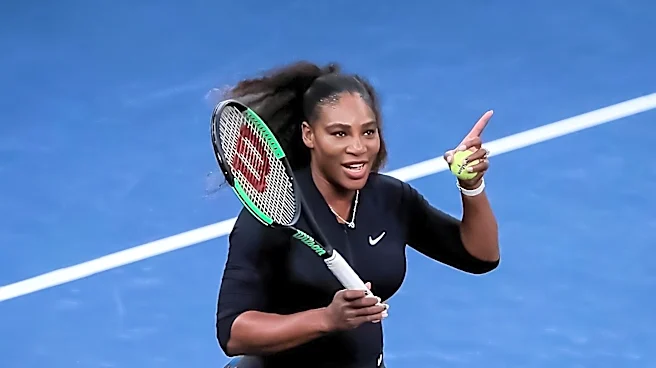
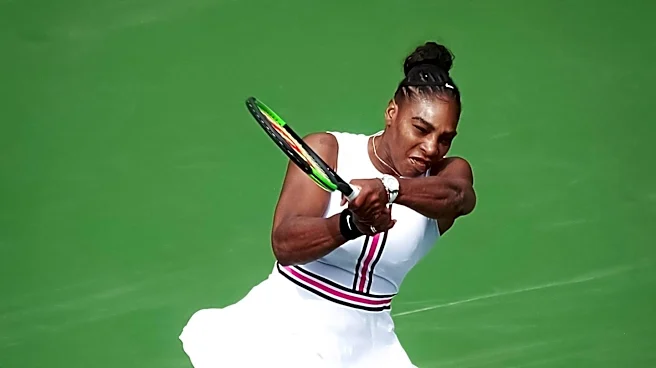
Serena Williams made a return to professional tennis in June 2026 after a nearly four-year hiatus, participating in five events: Queen's, Berlin, Wimbledon, Cincinnati, and the US Open. Her comeback schedule was limited, featuring four doubles appearances
and only one singles match, where she lost to Maya Joint at Wimbledon. A knee injury sustained at Wimbledon further restricted her plans for the remainder of the season. Despite these challenges, Williams recently appeared in a viral video with YouTuber iShowSpeed, where she defeated him in a tiebreak challenge, garnering significant online attention. This appearance has been her most high-profile moment on a tennis court since her injury. Williams has not made a definitive public statement regarding her plans for the 2027 season, though she indicated in late August that she 'probably will play again.' Rumors suggest a possible appearance at the WTA 250 in Auckland to start the upcoming season, but this remains unconfirmed. Her eligibility for the International Tennis Hall of Fame's Class of 2027 ballot has been reset due to her 2026 comeback, pushing back a potential induction date.
Why It's Important?
Serena Williams' return to professional tennis carries significant weight for the sport, drawing considerable media and fan attention. Her presence, even in a limited capacity, boosts viewership and engagement, particularly among younger audiences exposed to her through viral content like the iShowSpeed video. The uncertainty surrounding her 2027 plans creates anticipation and speculation, impacting potential tournament entries and overall WTA tour dynamics. Her decision to continue playing also directly affects her Hall of Fame eligibility, as each match she competes in restarts the five-year waiting period. This means her induction, initially anticipated for 2031, could be delayed until 2033 or later. For the tennis world, Williams' continued participation, even at 45 years old and with recent injuries, symbolizes enduring competitive spirit and could inspire other athletes. Her influence extends beyond the court, as her business ventures, like Serena Ventures, continue to thrive, showcasing her impact as an entrepreneur.
What's Next?
The immediate focus will be on any official announcements from Serena Williams regarding her participation in the 2027 tennis season. The Australian Open in January is considered a natural target for her return to singles, with some speculation that her recent doubles appearances were aimed at building towards this goal. The ASB Classic in Auckland has also been mentioned as a potential warm-up event, and tournament organizers have expressed interest in her return. Her decision will dictate her training regimen and potential tournament schedule for the upcoming year. Should she choose to play, her performance will be closely watched, especially given her age and recent knee injury. Her continued play will also further delay her induction into the International Tennis Hall of Fame, pushing back the timeline for this significant career milestone. The tennis community will be awaiting definitive statements from Williams or her team in the coming weeks regarding her competitive future.
Beyond the Headlines
Serena Williams' extended career and recent comeback highlight broader themes within professional sports, particularly concerning athlete longevity, the impact of injuries, and the balance between competitive drive and personal life. At 45, her continued presence challenges conventional notions of retirement ages for elite athletes, especially mothers. Her decision to return, despite a knee injury and a limited schedule, underscores a deep-seated passion for the game and a desire to compete on her own terms. This also brings into focus the evolving landscape of sports media, where viral online content, like her match with iShowSpeed, can introduce legendary athletes to new, younger demographics who may not have followed their prime careers. Furthermore, the delay in her Hall of Fame induction due to her comeback raises questions about the rules and implications of such eligibility criteria, particularly for athletes who choose to return to competition after an initial 'retirement' period. Her journey continues to redefine what is possible for female athletes in terms of career span and influence.