

What's Happening?
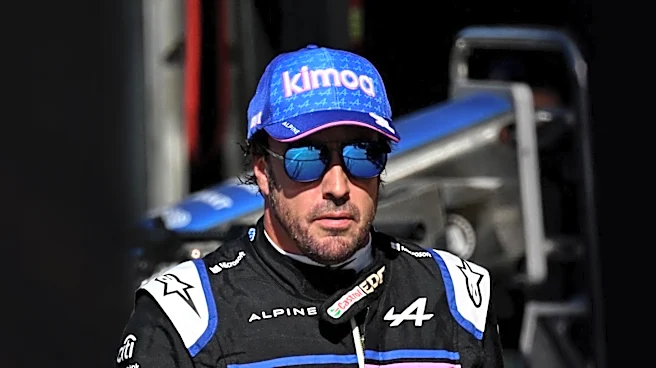
Fernando Alonso, the Aston Martin driver, has voiced his desire for significant changes in Formula 1 regulations to improve the driving experience, a factor that will heavily influence his decision to continue competing beyond 2027. Alonso believes that current
F1 cars do not offer the level of driving enjoyment they should, and he is concerned that the regulatory changes already planned for 2027 and 2028 may not fully address this issue. His primary concern is not the competitiveness of his engine, but rather the overall experience behind the wheel. He suggests that the current system, which involves rapid acceleration followed by a drop in power as electrical energy depletes, leads to an unnatural driving style, forcing drivers to perform 'lift and coast' maneuvers. Alonso proposes reducing the maximum battery power to allow for its use over longer periods, which he believes would result in more consistent car behavior and a more traditional racing feel. This sentiment is echoed by Max Verstappen, who also advocates for a greater emphasis on the combustion engine and less on battery power.
Why It's Important?
Alonso's call for regulation changes highlights a growing concern among experienced drivers about the fundamental nature of Formula 1 racing. If the driving experience becomes less engaging or more artificial due to technical regulations, it could impact the sport's appeal to both drivers and fans. The involvement of prominent figures like Alonso and Verstappen in advocating for these changes suggests a potential shift in the sport's direction, moving towards a more 'pure' driving experience. This could lead to a re-evaluation of the balance between combustion and electrical power, potentially influencing future technological development in motorsport. For manufacturers, this could mean adjusting their research and development priorities, while for the sport's governing bodies, it presents a challenge to balance innovation with driver satisfaction and fan engagement. The outcome of these discussions could shape the future identity of Formula 1, affecting its competitive landscape and its long-term sustainability as a premier racing series.
What's Next?
The FIA has already outlined changes for 2027 and 2028, which will gradually increase the proportion of combustion power relative to electrical power in F1 engines. However, Alonso and Verstappen's comments suggest that these planned adjustments might not be sufficient to address the core issue of driving enjoyment. It is likely that further discussions and proposals will emerge from drivers and teams regarding additional modifications to the regulations, particularly concerning the management and deployment of electrical energy. Laurent Mekies, Team Principal of Red Bull, has indicated support for further adjustments if there is a consensus among stakeholders, suggesting that the door is open for more comprehensive changes. The ongoing dialogue between drivers, teams, and the FIA will be crucial in determining whether Alonso's proposed changes, or similar ones, are adopted. The decisions made in the coming months and years will directly influence the technical specifications of future F1 cars and, consequently, the nature of racing in the sport.
Beyond the Headlines
The debate surrounding F1 regulations extends beyond mere technical specifications; it touches upon the very essence of what defines a 'racing car' and the skill required to drive it. Alonso's remarks about drivers having to 'undo' years of learned instincts to adapt to current F1 cars suggest a philosophical conflict between technological advancement and the traditional art of driving. If the sport continues on a path where engineering and energy management overshadow raw driving talent, it risks alienating a segment of its audience and potentially deterring future generations of drivers who seek a more visceral and challenging experience. The emphasis on 'pure' driving, as advocated by Alonso and Verstappen, could lead to a re-evaluation of how F1 balances its role as a technological showcase with its identity as a competitive sport. This could also have broader implications for other motorsport categories, influencing how they approach hybrid technologies and driver-centric regulations.