




What's Happening?
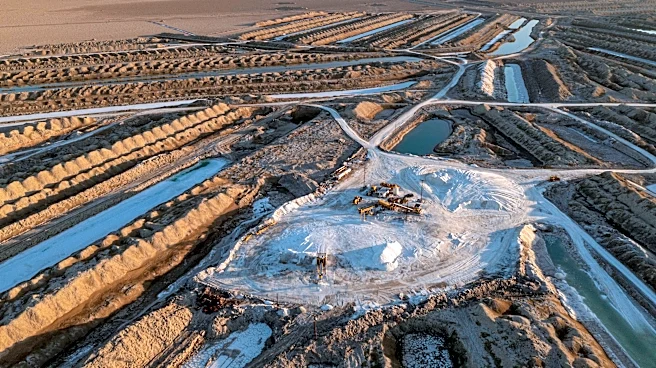
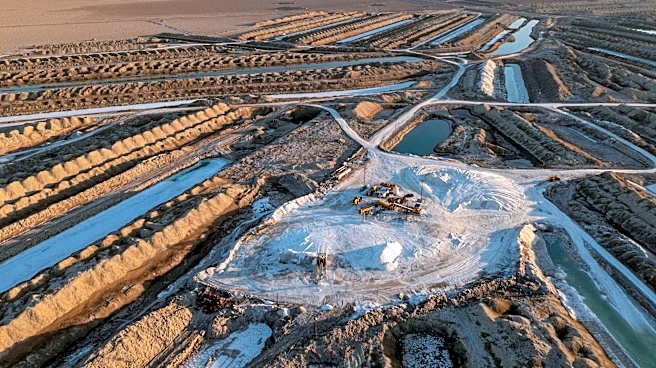
Lithium Americas Corp. (LAC), a Vancouver-based developer, is experiencing significant stock volatility due to cost overruns and a delayed production timeline for its primary asset, the Thacker Pass lithium project in Humboldt County, Nevada. The project,
a joint venture with General Motors holding a 38% stake and LAC owning 62%, is also supported by a U.S. Department of Energy loan. The estimated capital cost for Thacker Pass Phase 1 has risen by approximately $900 million to about $3.83 billion, attributed to labor, tariffs, and logistics. LAC is currently pre-revenue, with mechanical completion of Phase 1 anticipated in late 2027 and production ramp-up expected through 2028. The company's stock has seen a year-to-date return of -36.61% as of November 27, 2026, and analysts have lowered price targets while maintaining neutral ratings.
Why It's Important?
The developments at Lithium Americas Corp. are significant for the U.S. supply chain efforts in critical minerals, particularly for electric vehicle battery production. The Thacker Pass project is a key domestic source of lithium carbonate, and its successful development is crucial for reducing reliance on foreign sources. The cost overruns and delayed production timeline could impact the availability and cost of lithium for U.S. battery manufacturers, potentially affecting the growth of the electric vehicle industry. General Motors, as a significant stakeholder, also faces implications regarding its investment and future lithium supply. The volatility in LAC's stock highlights the inherent risks and challenges associated with early-stage critical mineral development, influencing investor sentiment and future funding for similar projects aimed at bolstering U.S. industrial independence.
What's Next?
Lithium Americas Corp. plans to address the cost overrun through joint-venture contributions and drawdowns from its U.S. Department of Energy reserve. The company ended the recent quarter with approximately $1.26 billion in cash and restricted cash, which will be crucial for managing the increased capital expenditure. The focus will remain on achieving mechanical completion of Phase 1 by late 2027 and initiating production ramp-up through 2028. Future developments will likely involve continued monitoring of construction progress, financial management to cover the increased costs, and potential further adjustments to the project timeline. The market will be closely watching for updates on funding and operational milestones, which could influence investor confidence and the company's stock performance.
Beyond the Headlines
The challenges faced by Lithium Americas Corp. at Thacker Pass underscore broader issues within the U.S. critical minerals sector, particularly the complexities of developing large-scale mining projects. The reliance on government loans and joint ventures highlights the strategic importance placed on domestic lithium production for national security and economic competitiveness. The cost increases due to labor, tariffs, and logistics reflect the inflationary pressures and supply chain vulnerabilities impacting major infrastructure projects. This situation could prompt a re-evaluation of risk assessment and funding mechanisms for critical mineral projects, potentially leading to more robust government support or revised investment strategies to mitigate similar future challenges and ensure the stability of the U.S. electric vehicle supply chain.