






What's Happening?
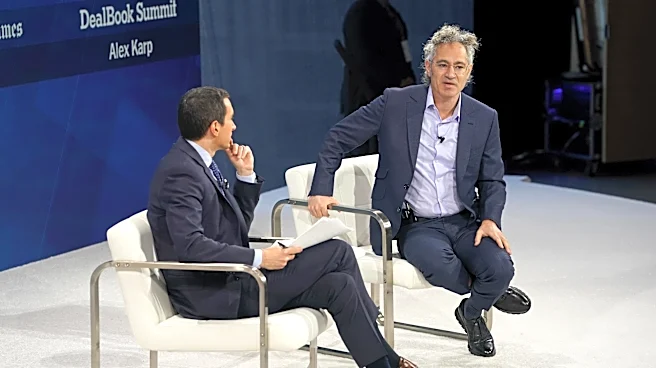
Alex Karp, the CEO of Palantir, has publicly criticized leaders of prominent artificial intelligence companies, including OpenAI and Anthropic. In an interview with CNBC, Karp stated that these AI leaders "don’t understand how unlikeable they are." This
comment highlights a growing tension and philosophical divide within the rapidly evolving AI industry. Karp's remarks suggest a concern regarding the public perception and perhaps the operational approaches of some of the leading figures in the AI sector. The criticism comes as AI technology continues to advance rapidly, drawing increased scrutiny and debate over its development and societal impact. This public statement by a CEO of a major data analytics company underscores a potential rift in how AI's future is being shaped and communicated to the public.
Why It's Important?
This criticism from Alex Karp is significant because it comes from a leader of Palantir, a company deeply involved in data analytics and AI applications, particularly for government and large enterprises. His comments could influence how the public and policymakers perceive the leadership and ethical considerations within the AI industry. If key figures in AI are seen as 'unlikeable' or out of touch, it could erode public trust, potentially leading to increased regulatory pressure or public skepticism towards AI advancements. For companies like OpenAI and Anthropic, maintaining a positive public image is crucial for their continued growth, talent acquisition, and securing investment. Karp's remarks might also signal a competitive dynamic, where different AI companies are vying not just for technological superiority but also for moral and ethical leadership in the sector. This could shape future collaborations, partnerships, and the overall direction of AI development in the U.S. and globally.
Beyond the Headlines
Karp's critique extends beyond mere personality, touching upon deeper issues of corporate responsibility and public relations within the tech industry. The 'unlikeability' he points to could stem from various factors, including perceived arrogance, a lack of transparency, or a failure to adequately address public concerns about AI's potential risks, such as job displacement, ethical biases, or autonomous decision-making. This public shaming by a peer could prompt AI leaders to re-evaluate their communication strategies and engagement with the broader public and regulatory bodies. It also highlights a potential cultural clash between different segments of the tech world—those focused on rapid innovation at all costs versus those emphasizing more cautious, publicly-minded development. Ultimately, this discourse could contribute to a more nuanced and critical public conversation about who controls AI, how it's developed, and for whose benefit.