






What's Happening?
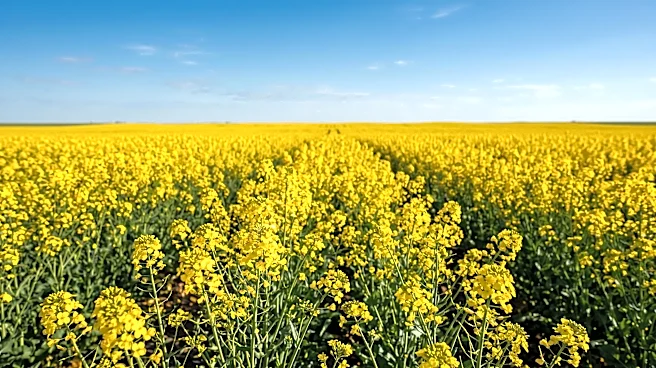
Global agribusiness company Bunge has announced it will process BASF’s InVigor Gold canola seed. This collaboration is a significant step towards the commercialization of the product, as BASF prepares for its U.S. launch in 2027. InVigor Gold canola seed is specifically
developed for cultivation in warmer, drier environments and soils with lower organic matter. The companies confirmed in a joint statement on September 22 that the InVigor Gold canola grain meets Federal Grain Inspection Service (FGIS) canola-quality standards. This allows it to be processed either directly or mixed with traditional black-seed canola (Brassica napus). BASF initially introduced farmers to InVigor Gold canola seed in 2025, highlighting its potential to unlock the genetic capabilities of Brassica juncea. The first hybrid in this portfolio, InVigor Gold L322, was announced by BASF in June, with initial commercial availability for growers in Montana, North Dakota, and Washington slated for 2027.
Why It's Important?
This partnership between Bunge and BASF is important for the U.S. agricultural sector, particularly for canola growers. The InVigor Gold canola seed is designed to expand canola cultivation into regions previously considered challenging due to warmer, drier conditions and lower organic matter soils. This could lead to increased acreage for canola production in states like Montana, North Dakota, and Washington, offering farmers new options for crop rotation and potentially enhancing their profitability. For Bunge, processing this specialized seed strengthens its position in the agricultural inputs sector and its role in the supply chain for innovative crop solutions. For BASF, securing Bunge as a processor is crucial for the successful market entry and widespread adoption of InVigor Gold, ensuring that the product can be efficiently processed and integrated into existing agricultural systems. The development also underscores the ongoing innovation in agricultural biotechnology aimed at improving crop resilience and yield in diverse environments.
What's Next?
The immediate next step involves Bunge commencing the processing of BASF’s InVigor Gold canola seed in preparation for its commercial launch. BASF plans to make InVigor Gold L322, the first hybrid in the portfolio, commercially available to growers in Montana, North Dakota, and Washington starting in 2027. This period leading up to 2027 will likely involve further logistical and operational preparations between Bunge and BASF to ensure a smooth rollout. Farmers in the target regions will be evaluating the new canola option for its suitability in their rotations and its potential benefits in challenging growing conditions. The success of this initial launch will be critical in determining the broader adoption and expansion of InVigor Gold canola across other U.S. agricultural regions. Both companies will likely monitor market reception, yield performance, and farmer feedback closely to inform future development and distribution strategies.
Beyond the Headlines
The introduction of InVigor Gold canola seed and Bunge's role in its processing highlights a broader trend in agriculture: the increasing focus on developing and integrating crops that are resilient to changing climate patterns. As agricultural regions face more frequent and intense droughts or shifts in temperature, seeds like InVigor Gold, designed for 'warmer, drier environments and lower organic matter soils,' become crucial for maintaining food security and agricultural productivity. This development also points to the growing collaboration between agribusiness giants and chemical companies to bring advanced biotechnological solutions to market. The ability of this new canola variety to meet FGIS quality standards and be co-mingled with traditional black-seed canola suggests a strategic effort to minimize disruption to existing processing infrastructure, facilitating its adoption. This could set a precedent for future crop innovations that prioritize both environmental adaptability and seamless integration into current agricultural practices.