

What's Happening?
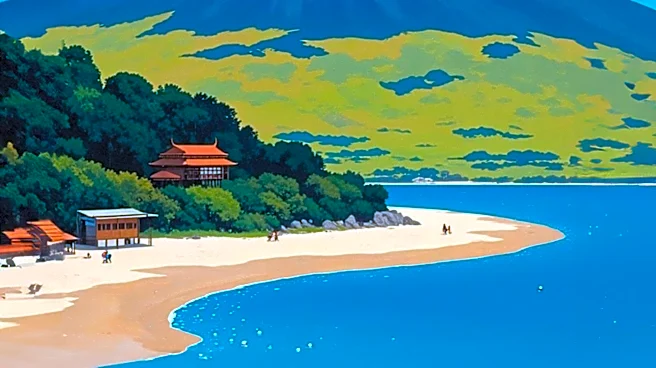
Studio Ghibli, the renowned animation studio founded by Hayao Miyazaki, Isao Takahata, and Toshio Suzuki in 1985, has reiterated its firm policy against producing sequels or remakes of its films. This commitment to original storytelling was confirmed
by President Kenichi Yoda and Goro Miyazaki, Hayao Miyazaki's son, in an article by Bloomberg. Despite the financial success often associated with sequels and remakes in the animation industry, particularly by studios like Disney-Pixar and DreamWorks, Ghibli maintains that its focus remains on creating new and unique narratives. This stance has been a long-standing principle for the studio, with past considerations for sequels, such as a follow-up to 2008's 'Ponyo on the Cliff,' ultimately being abandoned in favor of original projects like 'The Wind Rises.' The studio's leadership emphasizes that the process of filmmaking is a long and arduous task, and their dedication is to fresh creative endeavors rather than revisiting existing stories.
Why It's Important?
Studio Ghibli's unwavering commitment to original content stands in stark contrast to a prevailing trend in the global film industry, where sequels, prequels, and remakes often dominate production schedules. This approach by Ghibli highlights a dedication to artistic integrity over commercial expediency, potentially influencing other animation studios and filmmakers to prioritize creative innovation. For U.S. audiences and the broader entertainment industry, Ghibli's model serves as a significant example of how a studio can achieve critical acclaim and a dedicated fanbase without relying on established franchises. It underscores the value of unique storytelling and character development, which can foster a deeper connection with viewers. This philosophy also challenges the notion that financial success in animation is solely dependent on brand recognition and continuity, suggesting that original narratives can also be highly profitable and culturally impactful.
What's Next?
The future of Studio Ghibli remains a subject of discussion, particularly concerning leadership succession and the integration of new talent. With the passing of Isao Takahata in 2018 and Hayao Miyazaki's advanced age, the studio faces challenges in finding new directors to carry its legacy. While Goro Miyazaki has stated he has no immediate plans to propose film projects to his father, President Kenichi Yoda expressed openness to ideas from external directors, though he acknowledged the difficulties in the current environment. The presence of Hayao Miyazaki continues to be a significant factor, with Yoda humorously noting that no sane animation director would approach the studio while Miyazaki is still actively involved. Miyazaki himself continues to work at the studio daily, though the specifics of his current projects are kept private. The studio's commitment to originality suggests that any future productions will likely be new stories, rather than extensions of existing beloved films.
Beyond the Headlines
Studio Ghibli's steadfast refusal to produce sequels or remakes carries deeper implications for the cultural landscape of animation and storytelling. In an era where intellectual property (IP) maximization often dictates creative decisions, Ghibli's approach champions the intrinsic value of new artistic expression. This philosophy fosters a unique relationship with its audience, who anticipate fresh narratives rather than familiar retellings. Ethically, it raises questions about the balance between commercial viability and artistic integrity in the film industry. By consistently delivering original works, Ghibli cultivates a legacy of innovation and creative courage, potentially inspiring a new generation of animators and storytellers to explore uncharted territories. This commitment also contributes to the preservation of diverse storytelling traditions, preventing the homogenization of cinematic narratives that can result from an over-reliance on established franchises. The studio's model suggests that true artistic longevity might lie in continuous creation rather than perpetual reinterpretation.