







What's Happening?
A federal judge has reversed an earlier decision and rejected claims of ownership over the 'dembow rhythm,' a foundational beat in reggaeton music. This ruling is a significant victory for numerous artists, including Bad Bunny, Karol G, Daddy Yankee,
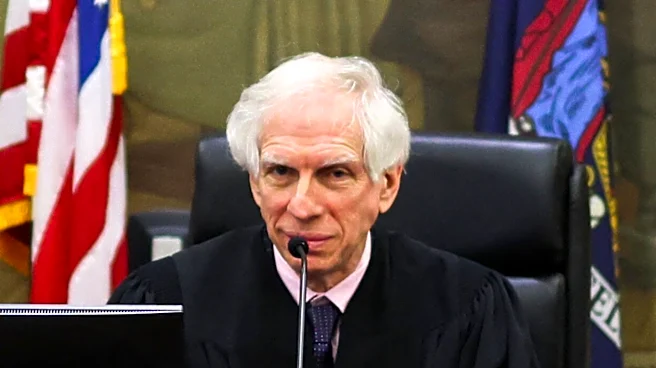
J Balvin, Drake, and Luis Fonsi, who were targeted in a 2021 lawsuit. The lawsuit, initiated by Jamaican producer Cleveland 'Clevie' Browne and the heirs of Wycliffe 'Steely' Johnson, aimed to establish copyright control over the rhythm, impacting over 1,500 songs. Judge André Birotte Jr. found that the plaintiffs failed to demonstrate that the allegedly protected musical arrangement exists in any single copyrighted work. Bad Bunny's attorneys argued that the plaintiffs were attempting to create a 'Frankenstein' copyright by assembling elements from three separate songs, a contention the judge ultimately agreed with. This decision eliminates a substantial portion of the lawsuit, though narrower claims concerning alleged direct sampling of Steely & Clevie recordings may still proceed.
Why It's Important?
This ruling is critically important for the U.S. music industry, particularly within the burgeoning Latin music market. Reggaeton, a genre with significant global and domestic appeal, relies heavily on the dembow rhythm. Had the copyright claim been upheld, it could have led to immense financial liabilities for countless artists, producers, and record labels, potentially stifling creativity and innovation within the genre. The decision safeguards the artistic freedom of reggaeton artists, ensuring that a fundamental rhythmic element remains in the public domain for creative use. It also sets a precedent regarding the copyrightability of basic musical components, emphasizing that common rhythms or beats, even if influential, cannot be easily monopolized. This protects smaller artists and emerging talents from potential legal challenges, fostering a more inclusive and dynamic musical landscape. The outcome reinforces the principle that copyright law is intended to protect specific creative expressions, not generic musical building blocks.
What's Next?
While the broader copyright claim on the dembow rhythm has been dismissed, the lawsuit is not entirely concluded. Narrower claims involving alleged direct sampling of specific Steely & Clevie recordings may still be pursued. This means that some artists could still face legal challenges if their work is found to have directly sampled copyrighted material rather than simply utilizing the dembow rhythm. The music industry will likely monitor these remaining claims closely, as they could further define the boundaries of copyright in sampling. This ruling may also encourage other artists and legal teams to challenge similar broad copyright claims on fundamental musical elements in other genres, potentially leading to a re-evaluation of intellectual property rights in music. The precedent set by this case could influence future legal strategies and industry practices concerning musical composition and production.
Beyond the Headlines
The legal battle over the dembow rhythm highlights a deeper tension within intellectual property law concerning the ownership of cultural and musical heritage. The dembow rhythm, originating from Jamaican dancehall, has evolved and been adopted across various musical traditions, becoming a cornerstone of reggaeton. This case underscores the challenge of applying traditional copyright frameworks to evolving musical genres that often build upon shared cultural elements. The judge's decision to reject the 'Frankenstein' copyright argument acknowledges that basic rhythmic patterns, which are often communal and evolutionary in nature, should not be subject to exclusive ownership. This outcome has significant cultural implications, affirming the collaborative and iterative nature of music creation, particularly in genres like reggaeton that draw from diverse influences. It prevents the commodification of a fundamental cultural rhythm, ensuring its continued accessibility and evolution within the global music landscape.