






What's Happening?
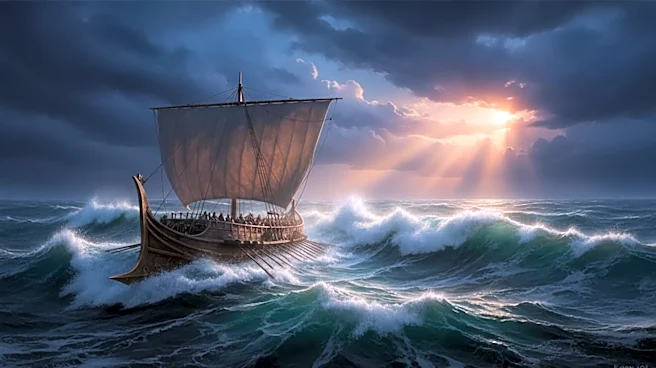
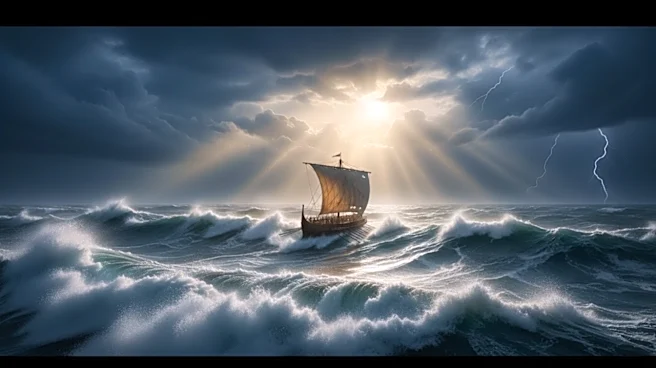
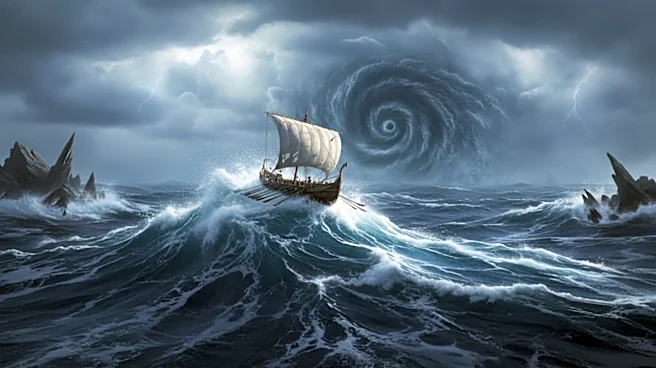
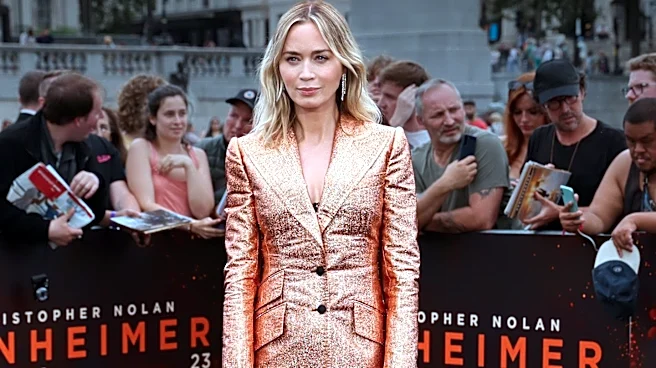
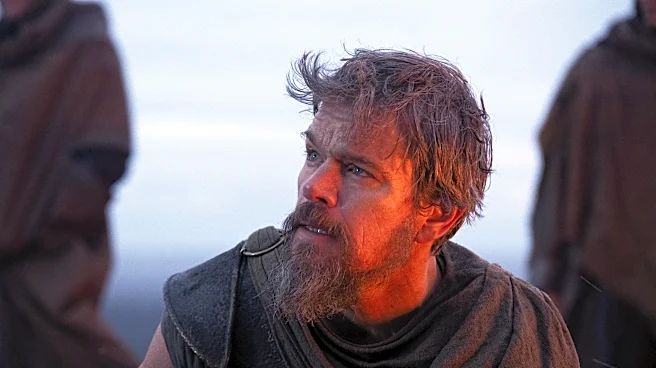
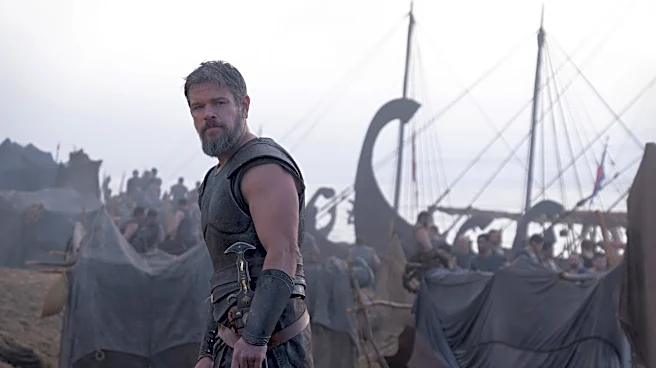
Christopher Nolan's latest film, 'The Odyssey,' based on Homer's epic poem, has been released to critical acclaim. The $250 million IMAX blockbuster is being hailed as one of Nolan's best works, with many critics awarding it five stars. The film features
an all-star cast including Matt Damon, Anne Hathaway, Zendaya, and Tom Holland. Critics have praised the film for its ambition, boldness, and cinematic flair, with some suggesting it could be a frontrunner for the Best Picture Oscar. However, some criticism has been directed at the film's portrayal of female characters and certain narrative choices. Despite this, the film is celebrated for its visual spectacle and storytelling.
Why It's Important?
The release of 'The Odyssey' is significant as it highlights the continued influence of classical literature in modern cinema. Nolan's adaptation brings a timeless story to a new audience, potentially sparking renewed interest in Homer's work. The film's success also underscores the viability of large-scale, high-budget productions in an era where streaming services dominate. Its potential Oscar contention could further solidify Nolan's reputation as a leading filmmaker. Additionally, the film's reception may influence future adaptations of classical works, encouraging filmmakers to explore similar projects.
What's Next?
As 'The Odyssey' continues to screen, its box office performance will be closely watched. The film's reception may impact its chances during the upcoming awards season, particularly the Oscars. Industry observers will be keen to see if the film's success prompts other directors to pursue similar epic adaptations. Additionally, discussions around the film's portrayal of gender roles and narrative choices may continue, potentially influencing future cinematic interpretations of classical texts.
Beyond the Headlines
The film's release raises questions about the adaptation of classical literature in contemporary cinema. Nolan's choices in character portrayal and narrative structure may spark debates about fidelity to source material versus creative interpretation. The film also highlights the ongoing conversation about gender representation in media, as some critics have noted the limited agency of female characters. These discussions may contribute to broader cultural dialogues about storytelling and representation in the arts.