






What's Happening?
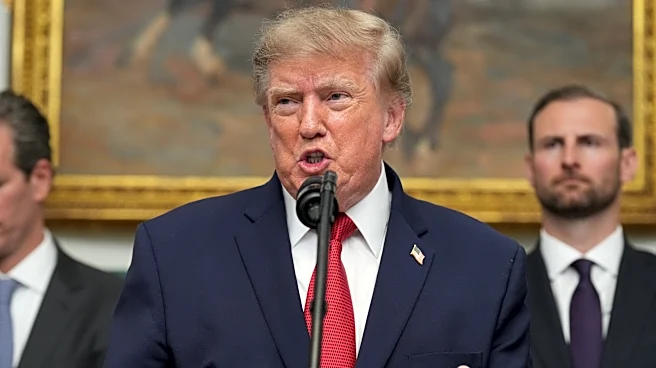
President Trump announced a temporary measure to allow a greater volume of foreign ground beef imports into the United States. This initiative aims to lower costs for American consumers ahead of the midterm elections. For the next 90 days, the U.S. will
permit up to 300,000 metric tons of ground beef product to be imported without an out-of-quota tariff. This decision comes as the U.S. cattle herd has shrunk to its smallest size since the 1950s, partly due to drought and international competition, which has driven up beef prices. President Trump stated on his Truth Social platform that the imported beef would be sold at 25 percent below market prices. This is the latest effort by the administration to address stubborn inflation, which has been exacerbated by an energy crisis linked to the war on Iran, impacting fuel, transportation, and food costs.
Why It's Important?
This temporary tariff relief is significant as it directly addresses the rising cost of living for American households, a key concern for voters as midterm elections approach. By increasing the supply of ground beef through imports, the administration hopes to alleviate price pressures on a staple food item. However, the move has drawn criticism from U.S. cattle and rancher groups, who argue that flooding the market with foreign beef could harm the domestic livestock industry and hinder efforts to rebuild the American cattle herd. Senator Deb Fischer of Nebraska expressed disappointment, stating that lower grocery prices should not come at the expense of American producers. The National Cattlemen’s Beef Association echoed these concerns, suggesting that such market interventions could sacrifice long-term stability for short-term political messaging.
What's Next?
The temporary tariff relief on ground beef imports is set to last for 90 days. During this period, the U.S. will monitor the impact on beef prices and the domestic market. President Trump has not specified which countries will be exporting the beef, but the commitment is for it to be sold at a significant discount. The administration will likely face continued pressure from domestic agricultural groups to balance consumer affordability with the interests of American ranchers. The effectiveness of this measure in significantly reducing ground beef prices and its reception by voters will be closely watched, especially given the upcoming midterm elections where affordability is a central issue. Further actions to address inflation and the energy crisis may also be considered.
Beyond the Headlines
This policy highlights the complex interplay between global supply chains, domestic agricultural policy, and consumer economics, particularly in an election year. The shrinking U.S. cattle herd points to deeper issues within the agricultural sector, including environmental factors like drought and competitive pressures. The administration's decision to prioritize immediate consumer price relief through imports, despite objections from domestic producers, underscores the political sensitivity of inflation. This situation could also prompt broader discussions about food security, the resilience of domestic food production, and the long-term strategies needed to ensure both affordable food for consumers and a sustainable livelihood for American farmers and ranchers. The reliance on imports, even temporarily, could set precedents for future responses to commodity price spikes.