



What's Happening?
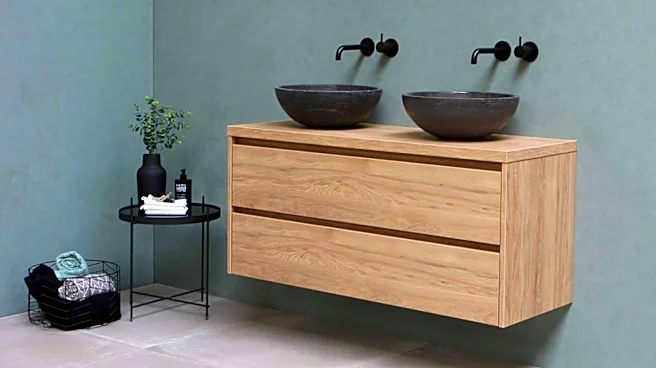
Homedit, an online publication focused on home design, is showcasing a growing trend in bathroom aesthetics: the integration of stone sinks directly carved from the same material as the countertop. This design approach moves away from conventional white
porcelain sinks, offering a more cohesive and striking visual. The featured designs include gray marble and stone, often with prominent veining that extends from the counter into the basin. Brass and aged-metal fixtures are frequently paired with these stone elements to provide contrast and emphasize the stone as the central design feature. Examples include rectangular stone slabs with carved basins, curved stone vanity tops where the basin is seamlessly integrated, and even freestanding tubs made entirely of the same stone material. This trend emphasizes natural materials and a unified look in bathroom design.
Why It's Important?
This design trend signifies a shift in consumer preferences within the U.S. home improvement and interior design markets. The move towards integrated stone sinks reflects a desire for more luxurious, natural, and unique bathroom fixtures, potentially impacting manufacturers of traditional porcelain and ceramic sinks. For homeowners, it offers an opportunity to elevate bathroom aesthetics and create a spa-like atmosphere, which can increase property value and appeal. The emphasis on natural stone also aligns with broader trends in sustainability and the use of organic materials in home decor. This could lead to increased demand for specialized stone fabricators and installers, creating new business opportunities and potentially influencing material sourcing and supply chains within the construction and design industries. The aesthetic shift also suggests a move away from mass-produced, standardized bathroom components towards more custom and artisanal solutions.
What's Next?
The increasing visibility of integrated stone sinks, as highlighted by publications like Homedit, suggests a continued rise in their popularity. This trend is likely to influence product development among bathroom fixture manufacturers, who may begin to offer more diverse stone options or integrated designs. Interior designers and architects are expected to incorporate these elements more frequently into their projects, further solidifying their presence in high-end and custom home builds. We may also see an expansion in the types of stones used, moving beyond gray marble to include other natural materials like granite, travertine, or onyx. Retailers specializing in home goods and bathroom renovations will likely expand their inventory to meet this demand, potentially leading to more accessible and varied options for consumers looking to adopt this sophisticated design choice.
Beyond the Headlines
Beyond the immediate aesthetic appeal, the adoption of integrated stone sinks reflects a deeper cultural appreciation for craftsmanship and natural materials in the home. This trend moves beyond mere functionality, transforming the bathroom into a sanctuary that emphasizes tactile experiences and visual harmony. The seamless integration of materials can evoke a sense of permanence and luxury, contrasting with the often disposable nature of modern consumer goods. Ethically, the sourcing of natural stone can raise questions about environmental impact and labor practices, prompting consumers and designers to consider the origins of their materials. Furthermore, the durability and longevity of stone fixtures contribute to a more sustainable approach to home design, reducing the need for frequent replacements and minimizing waste. This shift underscores a broader movement towards thoughtful consumption and investment in quality, enduring elements within the home environment.