









What's Happening?
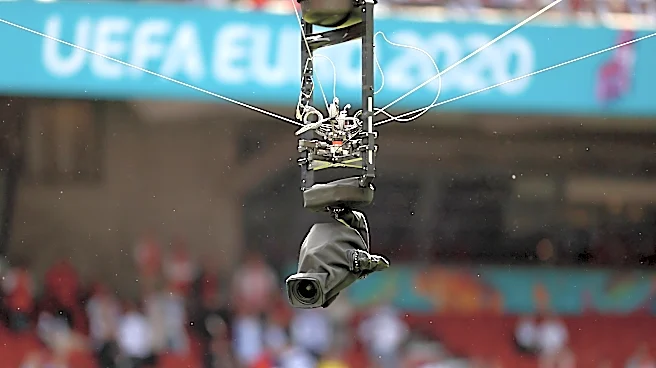
During the World Cup quarterfinal match between England and Norway, a controversy arose when it was alleged that the ball struck an overhead wire during first-half stoppage time. This incident occurred just before England's Jude Bellingham scored a decisive
goal. FIFA, the governing body of international soccer, has stated that there is 'no evidence' to support the claim that the ball hit a foreign object. According to FIFA, the sensor in the Connected Ball did not show any peak in the 'heartbeat of the ball' when it was in the air, indicating that the ball did not touch the wire. The rules stipulate that play should be stopped and resumed with a drop ball if such an incident is noticed, but since it was not observed, the game continued, leading to England's goal.
Why It's Important?
The incident highlights the challenges of officiating in high-stakes international sports events and the reliance on technology to make critical decisions. FIFA's dismissal of the claim underscores the importance of accurate and reliable technology in ensuring fair play. The decision not to stop the game could have significant implications for the outcome of the tournament, as it directly affected the match's result. This situation also raises questions about the effectiveness of current monitoring systems and whether additional measures are needed to prevent similar controversies in the future.
What's Next?
While FIFA has closed the case by stating there is no evidence of the ball hitting the wire, the incident may prompt discussions about improving the technology used in monitoring such events. Stakeholders, including teams and fans, might call for enhanced transparency and possibly the introduction of more advanced systems to detect and address similar occurrences. The outcome of this match could also influence future policy decisions regarding the use of technology in sports officiating.