





What's Happening?
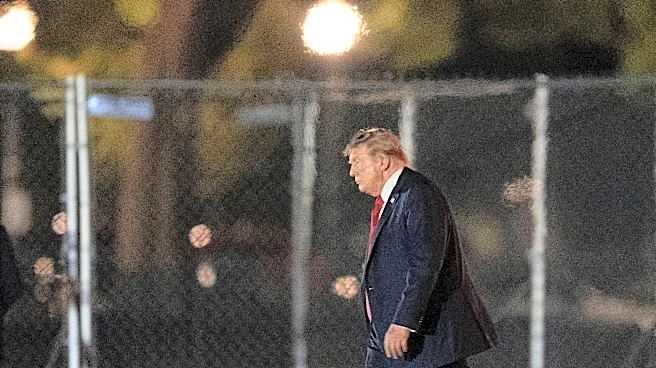
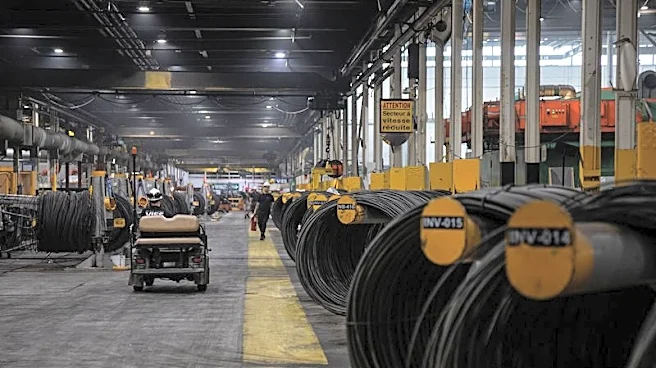
President Trump announced on August 24, 2026, that the U.S. will increase tariffs on imports of cars, trucks, automotive parts, and steel from Canada to 50%, effective January 1, 2027. This decision follows a breakdown in trade negotiations between the U.S. and Canada.
President Trump accused Canada of unfair trade practices, specifically citing their tariff policies that he claims harm U.S. farmers. He stated that Canada has been 'ripping off the United States of America for years' and declared that Canada 'will be treated like a State no longer!' The U.S. had previously imposed 50% tariffs on approximately $20 billion of Canadian goods, including wine, cement, and hockey sticks, in retaliation for alleged Canadian trade discrimination against U.S. cars, alcohol, and dairy. These earlier tariffs were implemented after Canadian negotiators left Washington without a trade deal, with both sides blaming each other for last-minute changes.
Why It's Important?
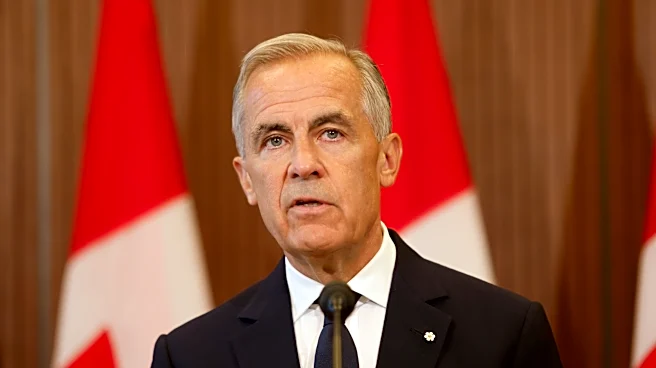
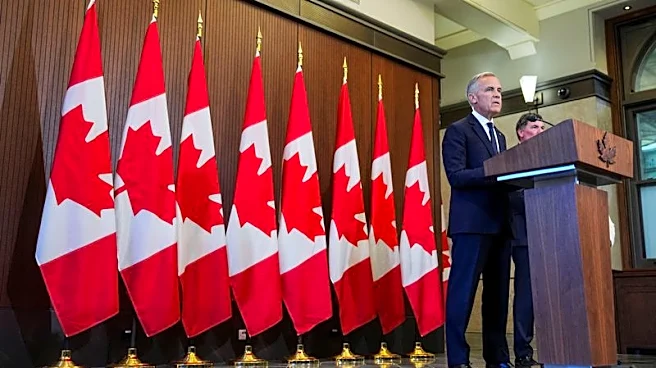
This significant increase in tariffs to 50% on Canadian auto and steel imports is poised to have a substantial impact on the U.S. economy and its relationship with a key trading partner. The automotive industry, a major sector in both countries, will face higher costs for imported parts and finished vehicles, potentially leading to increased prices for consumers and reduced competitiveness for manufacturers. The steel industry will also see its supply chains affected. This escalation could trigger further retaliatory measures from Canada, as Prime Minister Mark Carney has vowed to retaliate 'dollar for dollar' against U.S. tariffs. Such a trade war could disrupt established supply chains, harm businesses reliant on cross-border trade, and potentially lead to job losses in affected sectors. U.S. consumers could face higher prices for a range of goods, and the overall economic stability of the North American region could be jeopardized. The move also signals a hardening stance in U.S. trade policy, potentially influencing future trade negotiations with other countries.
What's Next?
The announced tariffs are set to take effect on January 1, 2027. In the interim, there is potential for further diplomatic efforts or negotiations, though the current breakdown suggests a challenging path forward. Canada is expected to implement its promised 'dollar for dollar' retaliatory tariffs, which could target various U.S. goods, further broadening the scope of the trade dispute. U.S. industries, particularly the automotive and steel sectors, will need to prepare for the increased costs and potential supply chain disruptions. Consumers may see price increases for vehicles and other goods. The political ramifications within the U.S. could also be significant, with some U.S. politicians already criticizing the escalation. The long-term impact on the North American Free Trade Agreement (NAFTA) or any successor trade agreements remains uncertain, as the current actions undermine the principles of free trade between the two nations.
Beyond the Headlines
The escalating trade dispute between the U.S. and Canada extends beyond immediate economic impacts, touching upon deeper geopolitical and ethical considerations. President Trump's assertion that 'WE DON'T NEED CANADA, THEY NEED US!' reflects a shift in diplomatic rhetoric, potentially redefining long-standing alliances and trade relationships. This approach could set a precedent for how the U.S. engages with other trading partners, emphasizing national self-interest over multilateral cooperation. The accusation of Canada 'ripping off' the U.S. also raises questions about the fairness and equity of existing trade agreements. Ethically, the imposition of tariffs can disproportionately affect consumers and businesses, leading to economic hardship for some while potentially benefiting others. The long-term consequence could be a more fragmented global trade system, characterized by protectionist policies and increased trade barriers, which could ultimately hinder global economic growth and foster international tensions.