







What's Happening?
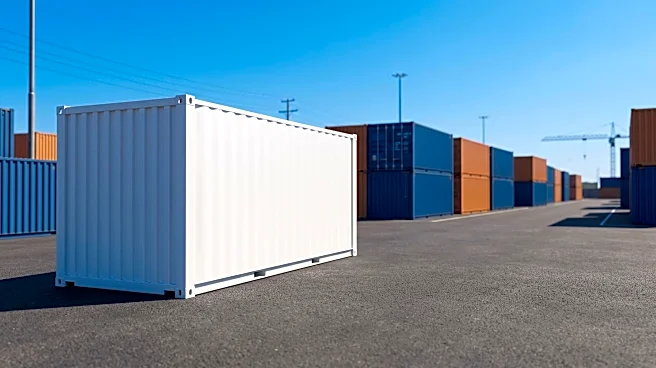
The Valenciaport Sandbox has successfully completed a pilot program testing a new passive radiative cooling film developed by the startup Cooling Photonics. The trial, conducted at the Transbase Soler depot during the summer, involved monitoring four
identical 20-foot containers under real summer conditions. One container was untreated, one had a conventional internal thermal blanket, a third had the material on the roof only, and the fourth had the material applied to both the roof and side walls. Independent sensors recorded internal temperatures every 15 minutes over fifteen consecutive days, accumulating over 5,600 readings. The results showed that the standard untreated container reached 53°C and spent over a third of the time above 40°C. In contrast, the container fully coated with the new material never exceeded 34.2°C, demonstrating a daily peak temperature reduction of 17.5°C on average, with a maximum difference of 22°C on the hottest day. This material reflects solar radiation before it penetrates the steel shell, allowing the container to cool naturally at night, rather than insulating and trapping heat.
Why It's Important?
This successful pilot program holds significant importance for the port and logistics sector, particularly in the context of increasingly intense summers and the need for climate change adaptation. The passive cooling film offers a solution to protect cargo and equipment by maintaining internal temperatures below 35°C without consuming energy, thereby limiting heat peaks and reducing thermal stress and material fatigue. This technology also enhances staff safety by mitigating heat stress in containers used as warehouses, workshops, or offices. Furthermore, its application can extend to other port assets like electrical cabinets and equipment, where reduced heat can lead to fewer shutdowns and increased reliability of power electronics. The innovation provides a resilience tool against extreme heat, contributing to more efficient and sustainable operations within the global supply chain. The ability to maintain cooler temperatures passively can lead to substantial energy savings and reduce the environmental footprint of logistics operations.
What's Next?
Following the conclusive results of this pilot, the next steps will likely involve the broader adoption and commercialization of Cooling Photonics' passive radiative cooling film within the port and logistics sector. The success at Valenciaport Sandbox, a testing ground for innovation, provides a strong case for its implementation across various port assets and logistics operations. Stakeholders such as port authorities, terminal operators, logistics companies, and depots are expected to explore integrating this technology to enhance cargo protection, improve working conditions, and achieve sustainability goals. Further research and development may focus on optimizing the material for different types of containers and environmental conditions, as well as exploring its application in other industrial settings where heat management is critical. The collaboration between innovative startups like Cooling Photonics and established port communities, facilitated by initiatives like Opentop, is expected to continue fostering the development and deployment of practical, measurable solutions for the industry.
Beyond the Headlines
The successful deployment of this passive cooling technology signifies a broader shift towards sustainable and resilient practices in global trade and logistics. Beyond the immediate benefits of cargo protection and energy savings, this innovation addresses the ethical imperative of ensuring safer working conditions for personnel in extreme heat environments, a growing concern due to climate change. It also highlights the potential for material science to offer elegant, low-tech solutions to complex environmental challenges, contrasting with energy-intensive active cooling systems. The Valenciaport Sandbox's role in validating such technologies underscores the importance of real-world testing environments for accelerating innovation. This development could inspire similar initiatives in other industries facing heat-related operational challenges, fostering a culture of open innovation and collaboration between startups and established entities to build more sustainable and adaptable infrastructure for the future.