





What's Happening?
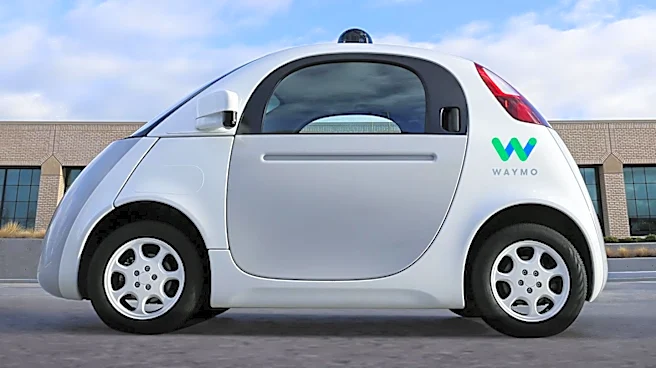
Waymo, a leading autonomous driving technology company, has publicly disclosed key details about the high-powered computing system, or 'brain,' that operates its robotaxis. This revelation includes information on the chip architecture, processor specifications,
internal component details, and a list of hardware suppliers. The system, housed in the trunk of its vehicles, is designed to perform up to one quadrillion operations per second. Waymo's Vice President of Engineering, Satish Jeyachandran, and Compute Lead, Daniel Rosenband, outlined three core design principles: responsiveness, ruggedness, and redundancy. The system must process massive streams of sensor data quickly, withstand environmental challenges, and operate with parallel systems for fail-safe measures. Waymo currently operates approximately 4,000 vehicles across more than 10 cities, conducting around 500,000 paid trips weekly, and claims its technology significantly reduces traffic incidents compared to human drivers.
Why It's Important?
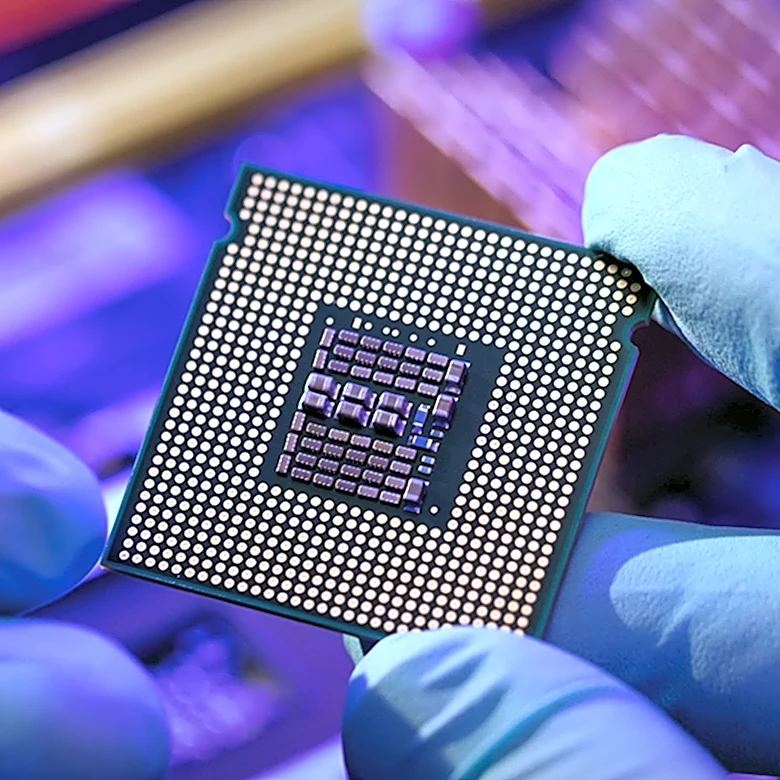
This disclosure provides a rare glimpse into the sophisticated technology underpinning Waymo's leadership in the driverless car industry. By detailing its compute system, Waymo aims to build confidence in its robust and redundant approach to autonomous driving, contrasting with other industry players who advocate for simpler, camera-only systems. The emphasis on a multi-sensor system, including lidar, radar, and cameras, and the custom 5-nanometer ASIC chip designed to process this data, highlights Waymo's commitment to safety and reliability. This transparency could influence industry standards and regulatory discussions surrounding autonomous vehicle technology. Furthermore, the reliance on a network of third-party suppliers like AMD, Micron, Nvidia, Samsung, SanDisk, Socionext, and TSMC underscores the collaborative nature of developing advanced autonomous systems and the global supply chain's critical role in this technological frontier.
What's Next?
Waymo's continued expansion and the performance of its disclosed technology will likely set benchmarks for the autonomous vehicle industry. The company's focus on real-time sensor fusion and front-end machine learning, combined with leveraging external hardware suppliers, suggests a strategic approach to scaling its operations. Future developments will likely involve further optimization of these systems to reduce costs, as the current hardware expenses, estimated at $20,000 to $25,000 per vehicle, remain a significant factor in the profitability of robotaxi services. The ongoing debate with other autonomous vehicle developers, particularly regarding the necessity and efficacy of different sensor types, will continue to shape research and development in the sector. Waymo's ability to maintain its safety record and demonstrate cost-effectiveness will be crucial for its long-term success and broader adoption of its technology.
Beyond the Headlines
The unveiling of Waymo's advanced computing architecture highlights the immense computational power required for safe and reliable autonomous driving, pushing the boundaries of artificial intelligence and real-time data processing. This technological arms race has broader implications for the semiconductor industry, driving demand for specialized chips and advanced manufacturing processes. Ethically, the design principles of redundancy and responsiveness underscore the critical importance of safety in AI-driven systems, where split-second decisions can have life-or-death consequences. The debate over sensor fusion versus camera-only approaches also touches on fundamental philosophical questions about how machines perceive and interpret the world, and which methods are most analogous to human cognition. Ultimately, the success of Waymo's 'brain' will not only transform transportation but also influence public perception and trust in AI's capabilities across various sectors.