

What's Happening?
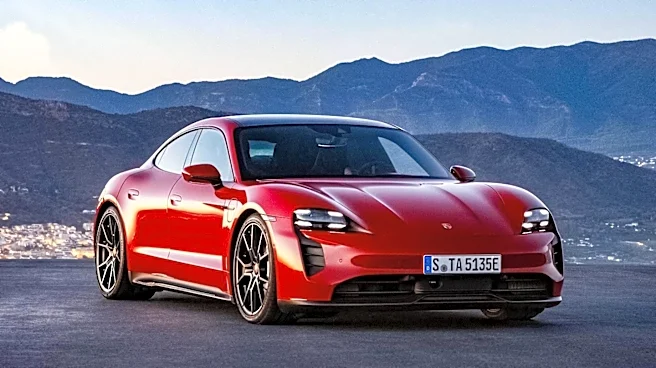
Porsche has issued a clarification regarding the future of its Taycan electric vehicle line, refuting recent reports that suggested the company was planning to discontinue production by the end of the decade. A Porsche spokesperson confirmed that while
the company is streamlining the Taycan range, this does not equate to discontinuing the entire model line. The process of reducing complexity has already begun in the U.S. market, where the Cross Turismo and Sport Turismo variants will no longer be available after the 2026 model year. Porsche emphasized its significant investment in the Taycan and stated that it will continue to monitor demand for the model. The automaker aims to simplify the electric model's lineup by reducing the number of available variants rather than abandoning its first dedicated electric sports car.
Why It's Important?
This clarification from Porsche is significant for the electric vehicle market and for consumers interested in high-performance EVs. Speculation about the Taycan's discontinuation could have negatively impacted consumer confidence in Porsche's long-term commitment to electric mobility. By confirming its continued investment and plans to streamline rather than eliminate the model, Porsche reinforces its dedication to its electrification strategy. For the U.S. market, the discontinuation of specific Taycan variants like the Cross Turismo and Sport Turismo indicates a strategic adjustment to market demand and operational efficiency. This move allows Porsche to focus resources on the most popular configurations, potentially optimizing production and sales. It also signals that even established EV models are subject to market adjustments and portfolio optimization as the electric vehicle landscape evolves.
What's Next?
Porsche will proceed with streamlining the Taycan model range, particularly in the U.S. market, where the Cross Turismo and Sport Turismo variants will cease production after the 2026 model year. Consumers interested in these specific variants will need to consider purchasing them before the cutoff. Porsche will continue to monitor demand for the remaining Taycan configurations, which may lead to further adjustments in its product offerings. This strategy allows Porsche to adapt to evolving market preferences and technological advancements in the EV sector. The company's ongoing investment in the Taycan suggests that future updates, performance enhancements, or new features for the core models are likely, ensuring the Taycan remains competitive in the luxury electric sports car segment.
Beyond the Headlines
Porsche's decision to streamline the Taycan lineup, rather than discontinue it, reflects a broader trend in the automotive industry where manufacturers are constantly optimizing their electric vehicle portfolios. This move highlights the challenges and complexities of managing EV product lines, including balancing innovation, production costs, and consumer demand. The discontinuation of specific variants in the U.S. market could indicate a strategic shift towards more focused offerings, potentially driven by sales data or manufacturing efficiencies. This also touches upon the evolving definition of 'luxury' in the EV space, where customization and variety might be balanced against the need for streamlined production. The long-term implications could include a more consolidated EV market with fewer niche variants, as manufacturers prioritize models with broader appeal and higher profitability.