







What's Happening?
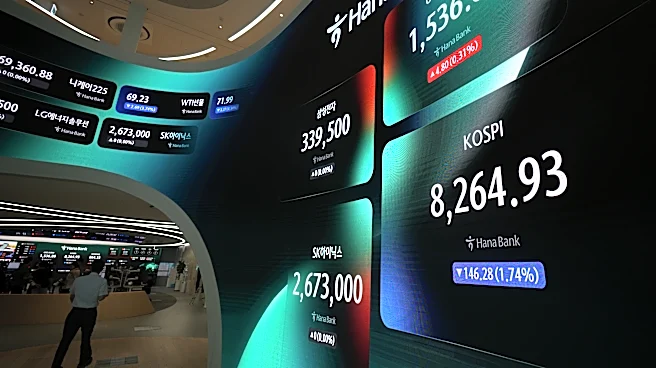
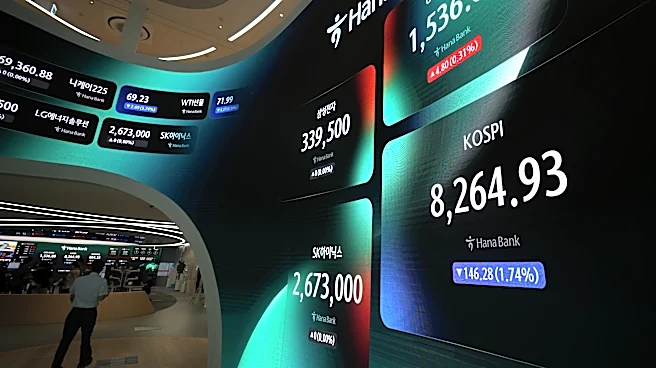
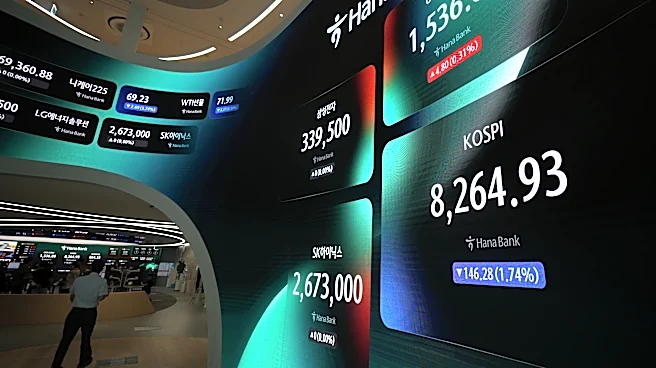
South Korea's Kospi index experienced significant volatility as it fell by as much as 7% due to a selloff in semiconductor stocks. Major companies like SK Hynix and Samsung Electronics saw their shares drop by about 10% before recovering some losses.
This downturn was influenced by a broader selloff in U.S. semiconductor stocks, which also affected Japan's Nikkei 225 index. Despite the recent declines, SK Hynix has seen a 200% increase in its stock value this year, while Japan's Kioxia surged by 600%. The volatility is attributed to profit-taking and concerns about the sustainability of the current favorable pricing environment for memory chips. Analysts have noted that while demand for memory chips remains strong, the market is susceptible to sharp pullbacks due to its recent strong performance.
Why It's Important?
The volatility in South Korea's Kospi index highlights the fragility of markets heavily reliant on semiconductor stocks. The recent selloff underscores the potential risks associated with profit-taking and the uncertainty surrounding the longevity of favorable market conditions. This situation is significant for investors and companies in the semiconductor industry, as it raises questions about future supply and demand dynamics. The strong performance of semiconductor stocks has been a key driver of South Korea's stock market success this year, but the recent downturn suggests that investors may need to brace for increased volatility. The developments also have implications for global markets, as the semiconductor industry plays a crucial role in the technology sector worldwide.
What's Next?
Looking ahead, market analysts expect further volatility, particularly with the upcoming U.S. nonfarm payrolls report, which could influence investor sentiment. Additionally, the potential for increased memory supply over the next two years may lead to a downturn in the semiconductor market by 2029 and 2030. Investors will need to monitor these developments closely, as they could impact long-term investment strategies in the tech sector. The situation also highlights the importance of diversifying investment portfolios to mitigate risks associated with sector-specific downturns.