






What's Happening?
Indian garment exporters are significantly rebalancing their export strategies by reducing their reliance on the U.S. market and increasing their focus on Europe and the domestic Indian market. This shift comes after U.S. tariffs on Indian apparel rose
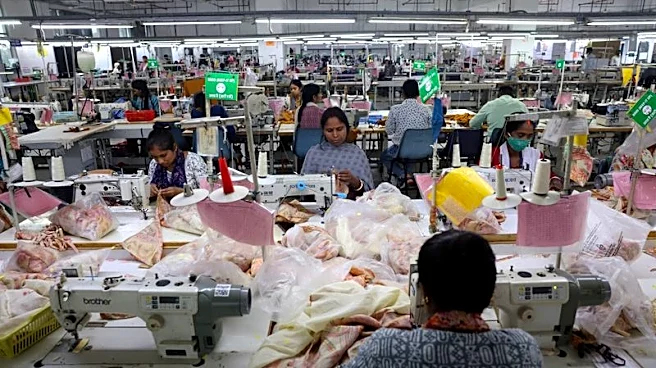
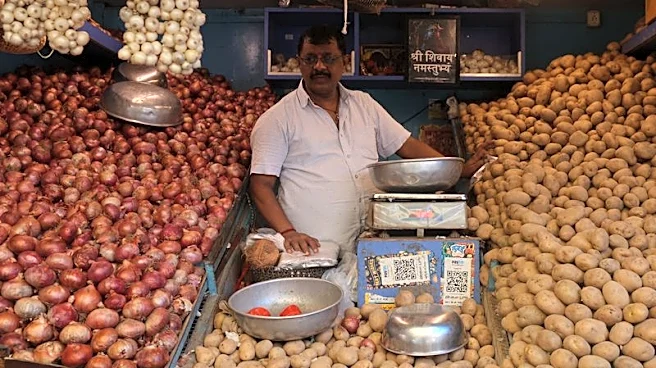
by as much as 50% last year. For instance, Orient Craft, a major Indian exporter, has drastically cut its U.S. sales from 84% to under 10%, now primarily stitching for British retailers like Next and Marks & Spencer. Similarly, Gokaldas Exports plans to increase Europe's share of its revenue to 25-30% over the next three to five years, up from its current 15-16%. The managing director of Gokaldas Exports views this as a permanent strategic change rather than a temporary adjustment. The Confederation of Indian Textile Industry has stated that diversification is becoming a structural strategy for the sector. India's robust domestic apparel market, valued at $150 billion and growing at 7-8% annually, provides a strong base for exporters amidst these international market adjustments.
Why It's Important?
This strategic pivot by Indian garment exporters has significant implications for the global textile and apparel industry, particularly for U.S. retailers and consumers. The increased U.S. tariffs have directly impacted the competitiveness of Indian apparel in the American market, leading to a re-evaluation of sourcing strategies by Indian manufacturers. For U.S. businesses, this could mean a potential reduction in the availability of certain Indian-made goods or an increase in their cost as supply chains adjust. Conversely, European retailers may benefit from increased sourcing opportunities and potentially more competitive pricing from Indian suppliers eager to expand their presence in the region. The strengthening of India's domestic market also signals a growing self-reliance within the Indian apparel industry, which could lead to the emergence of more local brands and reduced dependence on export markets in the long term. This rebalancing highlights the direct impact of trade policies, such as tariffs, on global supply chains and the strategic decisions made by major exporting nations.
What's Next?
In the immediate future, Indian garment exporters are expected to continue their aggressive push into European markets, with a particular focus on segments like activewear and innerwear, where India possesses strong manufacturing capabilities. Companies will likely invest further in enhancing product quality, building trust, and strengthening their global brand presence to compete effectively in these new markets. The $150 billion Indian domestic market is also poised for significant growth, offering substantial opportunities for Indian direct-to-consumer (D2C) brands to cultivate strong local brand loyalty. As global players restructure their supply chains in response to tariff changes, Indian brands have a unique window to solidify their position within their home country. This ongoing diversification is anticipated to be a long-term structural strategy, suggesting that the shifts observed are not temporary but rather a fundamental reorientation of India's apparel export landscape. U.S. importers may need to explore alternative sourcing regions or adjust to new pricing structures for goods previously sourced from India.
Beyond the Headlines
The reorientation of India's garment export strategy extends beyond immediate trade figures, signaling a broader recalibration of global manufacturing and supply chain dynamics. This move underscores the increasing influence of protectionist trade policies, such as tariffs, in reshaping international commerce and encouraging regionalization of supply chains. For the U.S., it highlights the potential for trade policies to inadvertently foster greater self-sufficiency or alternative trade relationships in other parts of the world, potentially altering long-standing sourcing patterns. Ethically, this shift could prompt discussions about fair trade practices and the impact of tariffs on developing economies that rely heavily on exports. Culturally, as Indian manufacturers focus more on their domestic market, there could be a resurgence of local fashion trends and brands, further diversifying the global fashion landscape. This situation also emphasizes the resilience and adaptability of major manufacturing hubs like India, which can pivot quickly to new markets when faced with trade barriers, ultimately leading to a more diversified and potentially more robust global textile industry.