

What's Happening?
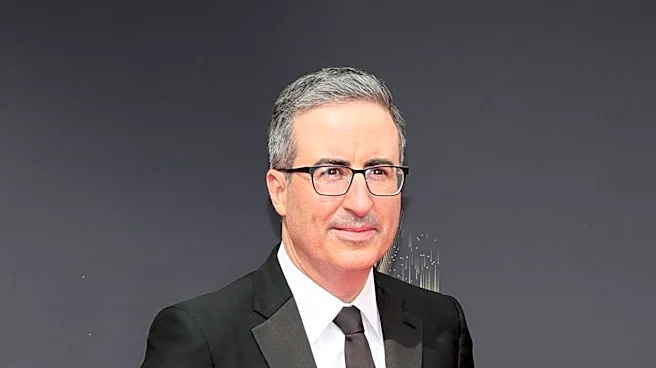
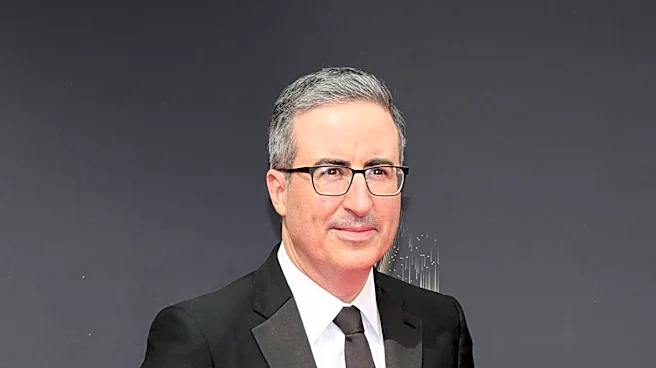
John Oliver, host of 'Last Week Tonight,' initiated a social media campaign encouraging viewers to create 'thirst-trap' images of Liberty Mutual's new mascot, 'Liberty Biberty.' This unusual request followed Oliver's strong disapproval of the puppet,
which he described as a 'fuzzy testicle with teeth' and 'Big Bird’s sleep paralysis demon.' The campaign was inspired by a similar incident involving Kiwibank's sheep mascot, Buck, which became sexualized online, leading to the bank's attempts at copyright takedowns and the mascot's eventual disappearance from their social media. Oliver's show even provided initial suggestive illustrations of Biberty, drawn by a staffer, to kickstart the trend. The internet has responded enthusiastically, generating numerous AI-created images of Biberty in various suggestive poses, often paired with other characters like Big Bird or Buck.
Why It's Important?
This event highlights the unpredictable and powerful nature of internet culture and its ability to subvert corporate branding efforts. By intentionally encouraging the sexualization of a corporate mascot, Oliver is demonstrating how public perception, especially when amplified by social media, can quickly redefine a brand's image, often in ways unintended by the company. For Liberty Mutual, this could lead to a significant public relations challenge, as their mascot becomes associated with content far removed from their intended brand message of insurance and reliability. The incident also underscores the challenges companies face in controlling their narrative in the digital age, where user-generated content can rapidly spread and reshape public opinion, potentially impacting brand reputation and consumer trust. The phenomenon also serves as a commentary on the effectiveness of viral marketing, albeit in an unconventional and potentially controversial manner.
What's Next?
It remains to be seen how Liberty Mutual will respond to the widespread 'Liberty Biberty' trend. They may choose to ignore it, issue a statement, or attempt to reclaim their mascot's image. Given the precedent of Kiwibank's experience with their mascot, any attempts at censorship or takedowns could inadvertently fuel the trend further. The ongoing creation and sharing of these images will likely continue to draw attention to both 'Last Week Tonight' and Liberty Mutual, potentially influencing public perception of both entities. The situation could also prompt other brands to re-evaluate their mascot choices and social media strategies, considering the potential for unexpected and uncontrollable online interpretations.
Beyond the Headlines
This situation delves into the broader implications of digital media and brand control. It raises questions about the ownership of a brand's image once it enters the public domain, especially in an era of widespread content creation and sharing. The deliberate attempt to 'thirst-trap' a corporate mascot also touches on the evolving nature of humor and satire in late-night television, using internet trends to critique corporate aesthetics. Furthermore, the use of AI-generated images in this context highlights the growing role of artificial intelligence in shaping online content and trends, and the ease with which new, often provocative, imagery can be created and disseminated. This event serves as a cultural touchstone, illustrating the dynamic interplay between traditional media, internet culture, and corporate branding in the 21st century.